The Jerk: Landing Positions

(A Blast from the Past article originally posted on 07/02/21)

We’ve covered the three landing positions for both the snatch and the clean in past articles, and not surprisingly, there are also three landing positions for the jerk. Again, each has its own advantages, so let’s briefly cover them:

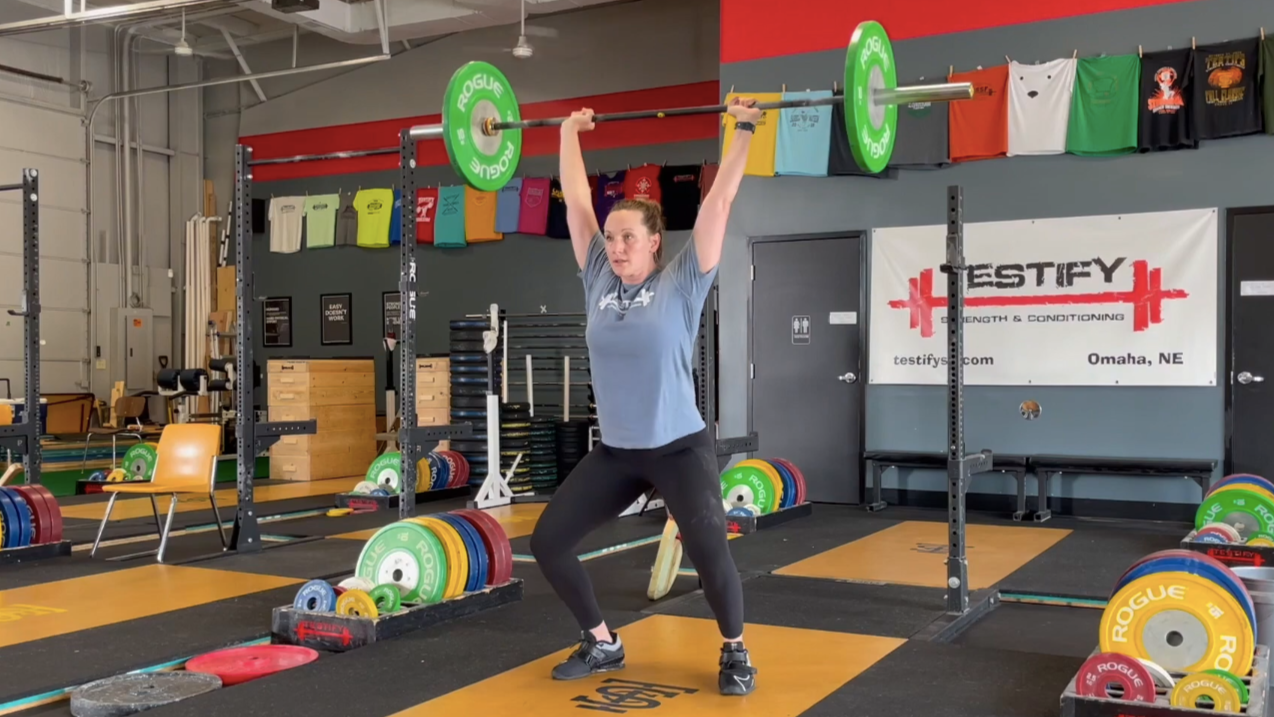
POWER JERK

Landing Position: Partial squat

Jonny performs a power jerk..

Jonny performs a power jerk.

Advantage: The power jerk is the simplest to learn as your feet do not travel far from their original position. Your feet don’t move very much as they barely leave the ground and then immediately land in a squat-width stance. You receive the bar overhead with your hips and legs in a partial-depth squat position. Due to its simplicity, the power jerk often serves as an intermediate step on the way to learning either the squat jerk or the split jerk.

Note: If your feet never leave the ground during this movement, many coaches will call this a push jerk to distinguish it from a power jerk (but some coaches use the terms interchangeably).

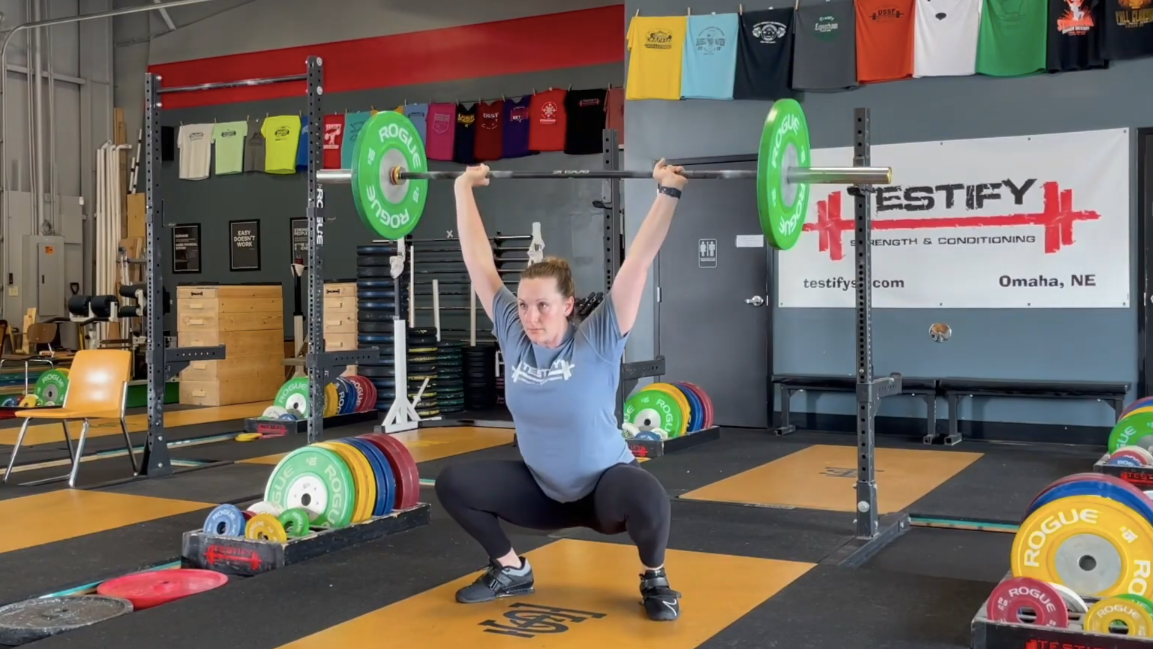
SQUAT JERK

Landing Position: Squat (i.e., full-depth squat)

Jonny performs a squat jerk.

Jonny performs a squat jerk.

Advantage: Of the three landing positions, the squat jerk allows lifters to drop the farthest under the bar, which means the barbell doesn’t have to be lifted as high before locking it out overhead. With this in mind, there is great potential with the squat jerk, but this potential is tempered by two drawbacks - first, the lifter needs excellent flexibility to achieve what is essentially a narrow-grip overhead squat position in the receiving position for this jerk, and second, the lifter has relatively little stability from front-to-back due to the lack of a split (see the split jerk below), so the squat jerk is extremely unforgiving of jerks that are slightly forward or backward.

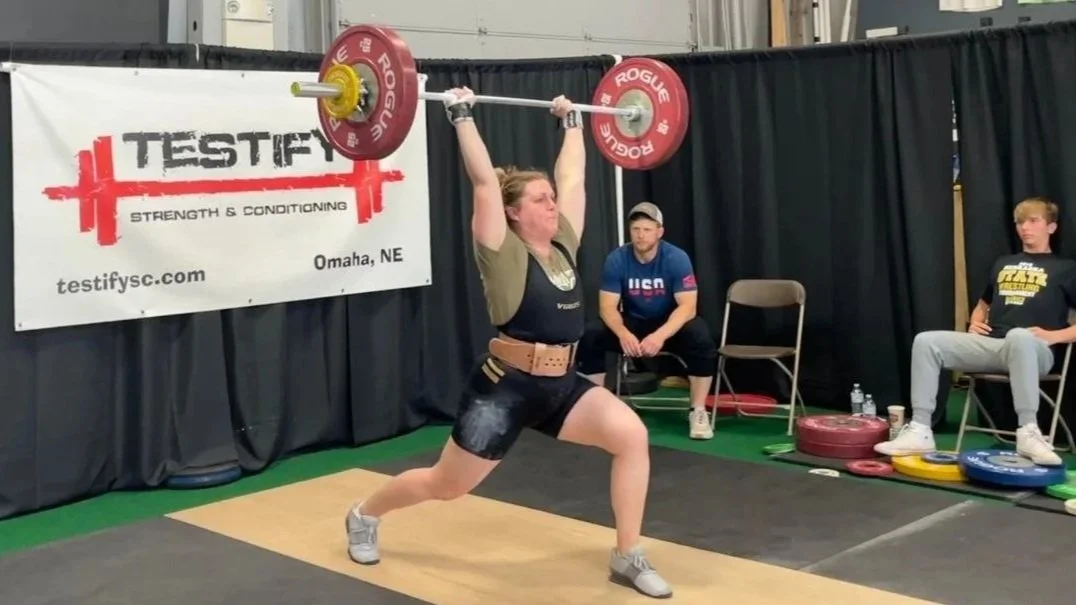
SPLIT JERK

Landing Position: Split stance

Jonny performs a split jerk.

Jonny performs a split jerk.

Advantage: The split jerk allows the lifter to drop further under the bar than the power jerk without requiring the ability to drop into the squat jerk position, and due to the front-to-back split, the split jerk is more stable. For this reason, the split jerk is - by far - the most commonly executed jerk in training and competition.

As always, we hope this helps you get stronger and live better.

-Phil

PS: Whenever you want even more Testify in your life, here are some free resources:

  • Book a free intro and strategy session with us HERE.

  • Pick up a free copy of Testify’s Squat Guide: 12 Tips to Improve Your Squat Now HERE.

  • Get our free weekly email - containing useful videos, articles, and training tips - HERE.

  • Follow Testify on Instagram HERE.

  • Subscribe to Testify’s YouTube channel HERE.

(Some links may be affiliate links. As an Amazon Associate, Testify earns from qualifying purchases.)


At Testify, we offer small group training, private coaching (in-person or remotely via Zoom), online coaching, and form checks. Interested in getting stronger, looking better, and having more energy?

book a free intro

This Simple Tactic Fixed His Squat & Deadlift in One Rep

How can a cue actually help improve every lift?

Let’s dive in.

What Aspect of a Lift Does This Cue Help?
Today’s cue is useful at the beginning of the lift. It can be used over a broad range of lifts - from squats to deadlifts to bench presses to snatches - but it is specifically useful to address technical issues present at the start of the lift.

figure 1: becky demonstrates the error of breaking at the hips before before the knees at the start of the squat.

Here are a few examples of when today’s cue could be useful:

  • In the squat, you tend to break (i.e., bend) at the hips before the knees as you start your descent (Figure 1) instead of bending the hips and knees simultaneously.

  • In the deadlift, you try to yank or jerk the barbell off the floor (which causes all manner of problems).

  • In the bench press, you pop your shoulders and the bar slightly upward before starting each rep’s descent.

  • In the press, you “wind up your hips” and reach backward with your hips before pushing them forward at the start of the rep.

  • In the snatch, you have the same problem as in the deadlift, and you try to yank the bar off the floor (instead of accelerating it smoothly).

The Solution
The cue is simply “Smooth start.”

As with many solutions, this may seem a bit underwhelming, but the execution of it is both important and potentially profound in terms of its impact on your lifting, so let’s discuss how this applies to the errors above.

figure 2: becky correctly bends the hips and knees simultaneously as she starts her descent.

  • Squat: Cueing “smooth start” or even “slow start” allows you to focus on simultaneously bending both the knees and hips as you initiate the descent (Figure 2). Remember that this is a cue for the first few inches of the lift’s movement, and that’s where this simultaneous movement needs to happen in the squat.

  • Deadlift: You now are focused on pulling smoothly and not trying to yank the bar off the floor. This allows you to keep your back rigid and pull in a nice, vertical path.

  • Bench Press: The error of “popping” the shoulders up before starting the descent tends to be a quick movement, so cueing “smooth start” helps eliminate this bench press twitch.

  • Press: “Slow start” can again be a useful variation of the “smooth start” cue as both cues will tend to slow you down a bit at the start, and this allows you to focus on only pushing the hips forward (and thus not allowing them to move back).

  • Snatch: As with the deadlift, cueing “smooth start” encourages you to gradually accelerate the bar at the start of the pull instead of jerking the bar off the floor. The “slow start” variation of today’s cue can work when learning how to snatch and clean, but this cue usually needs to be abandoned as the weights get heavier, whereas “smooth start” remains useful at all weights.

Be sure to watch the included video (click here or scroll up) to see this cue in action, and as always, we hope this helps you get stronger and live better.

-Phil

PS: Whenever you want even more Testify in your life, here are some free resources:

  • Book a free intro and strategy session with us HERE.

  • Pick up a free copy of Testify’s Squat Guide: 12 Tips to Improve Your Squat Now HERE.

  • Get our free weekly email - containing useful videos, articles, and training tips - HERE.

  • Follow Testify on Instagram HERE.

  • Subscribe to Testify’s YouTube channel HERE.

(Some links may be affiliate links. As an Amazon Associate, Testify earns from qualifying purchases.)


At Testify, we offer small group training, private coaching (in-person or remotely via Zoom), online coaching, and form checks. Interested in getting stronger, looking better, and having more energy?

book a free intro

Slippery Lifting Platform?! Use THIS for Olympic Weightlifting & Strength Training

Do you have a slippery lifting surface? A slick platform can cause a lot of problems, whether you're snatching, clean-and-jerking, squatting, etc., so Starting Strength Coach Phil Meggers lets you in on a very simple (and rarely discussed!) method to make sure you've got good grip between your shoes and the platform.

(A Blast from the Past video originally published on 12/12/22)

Whenever you want even more Testify in your life, here are some free resources:

  • Book a free intro and strategy session with us HERE.

  • Pick up a free copy of Testify’s Squat Guide: 12 Tips to Improve Your Squat Now HERE.

  • Get our free weekly email - containing useful videos, articles, and training tips - HERE.

  • Follow Testify on Instagram HERE.

  • Subscribe to Testify’s YouTube channel HERE.


At Testify, we offer small group training, private coaching (in-person or remotely via Zoom), online coaching, and form checks. Interested in getting stronger, looking better, and having more energy?

book a free intro

Correct Grip for Snatch, Clean, and Jerk | Olympic Weightlifting Technique

Gripping the bar for the Olympic lifts shouldn't be complicated, but there are a few simple things you must do to ensure you're getting the most out of your lifts. Starting Strength Coach Phil Meggers explains.

(A Blast from the Past video originally published on 10/10/22)

Whenever you want even more Testify in your life, here are some free resources:

  • Book a free intro and strategy session with us HERE.

  • Pick up a free copy of Testify’s Squat Guide: 12 Tips to Improve Your Squat Now HERE.

  • Get our free weekly email - containing useful videos, articles, and training tips - HERE.

  • Follow Testify on Instagram HERE.

  • Subscribe to Testify’s YouTube channel HERE.


At Testify, we offer small group training, private coaching (in-person or remotely via Zoom), online coaching, and form checks. Interested in getting stronger, looking better, and having more energy?

book a free intro

This Mistake Will Ruin All Your Lifts...

The topic of today’s discussion is the mistake of not having a focal point, which can show up in two different ways.

Balance plays a pivotal role in your ability to move a challenging load. If you’ve squatted long enough, you’ve accidentally gotten forward onto the balls of your feet (and you remember how terrible that rep was), if the barbell drifts away from you slightly when deadlifting, it makes for a much harder rep than it should have been, and the press is exceptionally susceptible to bar path and balance issues.

figure 1: the wandering focal point

A focal point helps greatly with balance, so you don’t want to put your balance at a disadvantage by not having one. With this in mind, let’s cover the two forms of this error.

Error #1: The Wandering Focal Point
With this version of not having a focal point (Figure 1), your eyes wander when performing the lift. You might be looking forward at the start of the press, you might look up while pressing upward, and then you might look downward slightly as you lock out the press overhead.

Error #2: Closing Your Eyes
While this error (Figure 2) prevents you from committing error #1, it’s no better as closing your eyes prevents you from focusing your gaze on a single point. Your eyesight contributes mightily to your ability to balance, so you want to keep your eyes open.

figure 2: ladon demonstrates the error of closing the eyes when lifting.

The Solution
As is so often the case, you want to think about what you should do and not dwell on what you shouldn’t do. For example, if you tend to close your eyes when driving a heavy squat up out of the hole, don’t bother telling yourself, “Don’t close my eyes, don’t close my eyes!”

Instead, give yourself something to do. The moment you take your stance, tell yourself, “I’m going to look at this point and keep staring there during every rep and between every rep.” In other words, give you eyes a job to perform.

For the press, tape an X on the wall in front of you at eye-height, for the squat and the deadlift, put something on the floor out in front of you (such as a 2.5 lb plate or your water bottle), and if you’re benching, pick some point on the ceiling to stare at.

Stare at that point and remind yourself that you’re going to keep starting at it until you are completely done with the last rep. Give your eyes a job to do, and commit to it. If you keep doing this, you’ll be surprised at how quickly you can fix this problem.

As always, we hope this helps you get stronger and live better.

-Phil

PS: Whenever you want even more Testify in your life, here are some free resources:

  • Book a free intro and strategy session with us HERE.

  • Pick up a free copy of Testify’s Squat Guide: 12 Tips to Improve Your Squat Now HERE.

  • Get our free weekly email - containing useful videos, articles, and training tips - HERE.

  • Follow Testify on Instagram HERE.

  • Subscribe to Testify’s YouTube channel HERE.

(Some links may be affiliate links. As an Amazon Associate, Testify earns from qualifying purchases.)


At Testify, we offer small group training, private coaching (in-person or remotely via Zoom), online coaching, and form checks. Interested in getting stronger, looking better, and having more energy?

book a free intro

Timing and Bounce on the Jerk

(A Blast from the Past article originally posted on 11/18/22)

Let’s briefly address the “bounce and drive” aspect of the jerk. This applies to the split jerk, the power jerk, and the squat jerk. Note that we’re not referring to this motion as a “dip and drive” because we want the bounce of the jerk - i.e., the turnaround at the bottom of the movement - to be sharp and quick.

(Today’s topic is far more easily understood when watching it in action, so I’d strongly recommend watching the included video.)

By aiming for a short, quick, sharp bounce out of the bottom of the movement, we’re not only trying to impart as much upward momentum to the barbell as possible - we’re also endeavoring to take advantage of the flex (or whip) of the bar, and a sharp bounce does exactly this.

To achieve the proper “bounce and drive” that we’re aiming for, cue yourself “hard bounce” the next time you’re practicing your jerks. After the clean, immediately before starting the downward motion of the jerk, mentally remind yourself “hard bounce” and then try to get exactly that motion out of the bottom of the jerk.

As mentioned earlier, watching this motion in action is very helpful, so I’d recommend watching the video included earlier in this article. In the meantime, we hope this helps you get stronger and live better.

(Some links may be affiliate links. As an Amazon Associate, Testify earns from qualifying purchases.)

If you found this helpful, you’ll love our weekly email. It’s got useful videos, articles, and training tips just like the one in this article. Sign up below, and of course, if you don’t love it, you can unsubscribe at any time.


At Testify, we offer small group training, private coaching (in-person or remotely via Zoom), online coaching, and form checks. Interested in getting stronger, looking better, and having more energy?

book a free intro