Do ONE Thing to Get Stronger and Improve All Your Lifts!

(A Blast from the Past article originally posted on 10/06/23)

Let’s cover a cue that will help you with every single one of your lifts. To be precise, this is actually a type of cue, and more specifically, we’re discussing the concept of the overcue.

The overcue (i.e., an over-correction cue) communicates an exaggeration of what we want to happen in a specific lift, and it can be an extremely effective tool to achieve improved technique in any lift. Let’s take a look at a few examples:

Example 1: Squat
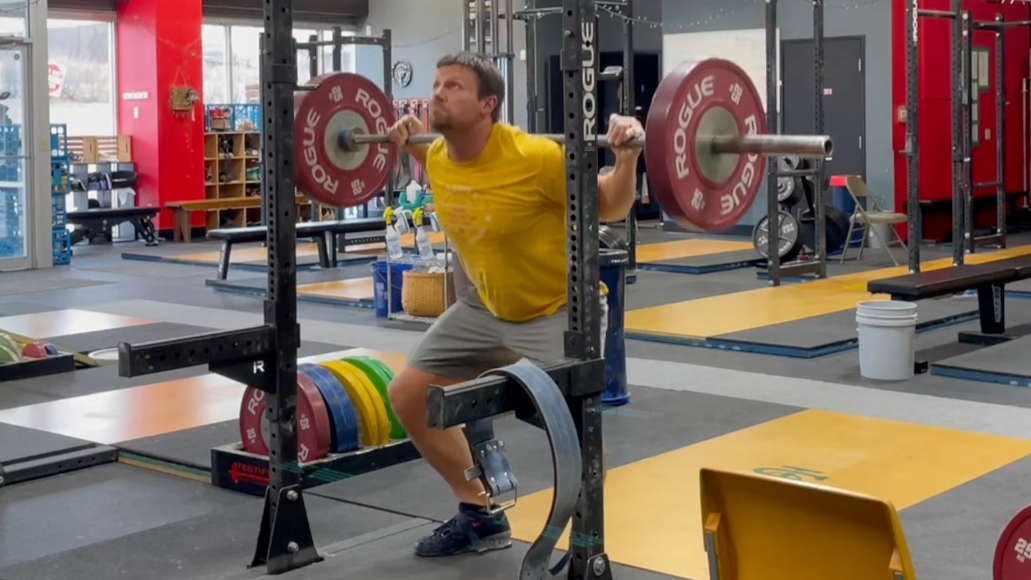
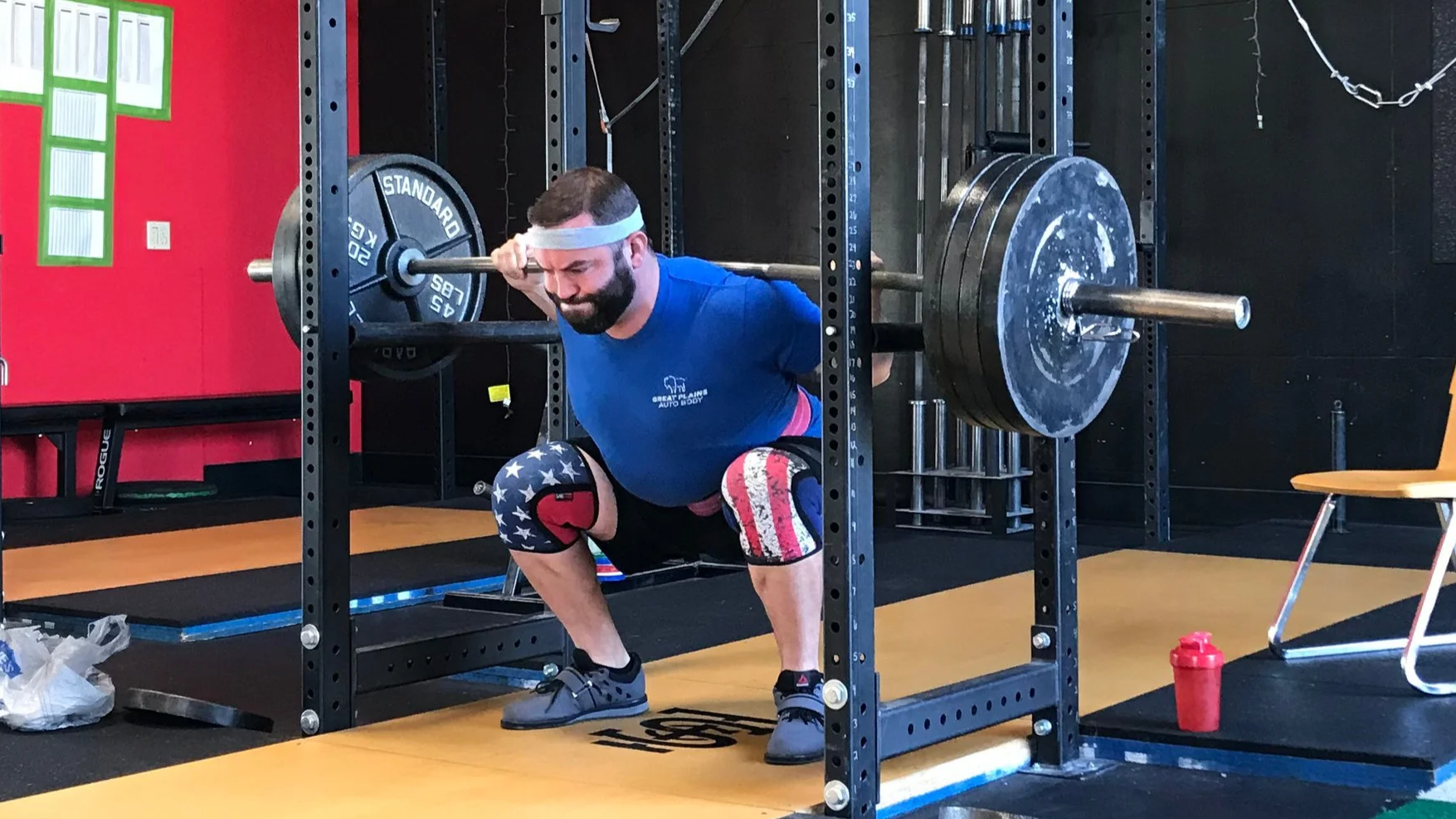
From watching video of yourself lifting, you notice you’re consistently squatting about an inch high. The first approach to solving this problem is to simply tell yourself to “squat one inch deeper” - in other words, tell yourself the truth. However, if that doesn’t do the trick, you may have to lie to yourself a bit, and that’s the idea behind the overcue: it’s a productive lie.

With this in mind, you cue yourself to “squat three inches deeper.” You don’t actually want or need to squat three inches deeper, but telling yourself to squat one inch deeper wasn’t doing the trick, so you exaggerate the concept of what you need to do in order to accomplish your goal.

Example 2: Deadlift
You’re raising your chest prematurely on the deadlift, and as a result, you’re pulling around your knees and making things much more difficult than they should be. You know the deadlift begins with knee extension, so you try a few cues such as “push the floor’ or “straighten the knees” to help with the movement.

However, if this doesn’t work, you move on to an overcue such as “hips go up first” or “hips first.” Of course, this is an exaggeration - you don’t want your hips to lead the way in the deadlift, but this exaggeration of the correct technique might just do the trick for you.

Example 3: Jerk
Got soft elbows when receiving the barbell overhead in the jerk? If you are pressing out your jerks and telling yourself to “lock it out” isn’t working, try cueing yourself to “lock it before you land it.” In other words, tell yourself to completely straighten your elbows before your feet hit the deck. This isn’t what actually happens in a correctly executed jerk, but that doesn’t matter - you are simply exaggerating an aspect of the correct movement to help improve your technique.

Example 4: Squat
You’re breaking at the hips before breaking at the knees; in other words, as you start your squat, you are bending at the hips first instead of correctly bending at the hips and knees simultaneously. First, you tell yourself the truth by using the cue “hips and knees together,” but if that doesn’t do the trick, it’s time to try something else.

In this case, an overcue such as “knees first” can be very useful. You don’t actually want your knees to bend before your hips do, but telling yourself the truth wasn’t working, so you introduce the overcue, and this tends to solve the problem quite nicely.

Use overcues judiciously. Remember that you are lying to yourself just a bit when you use one, so be conservative in your approach. First, cue yourself to do precisely what it is that you want to do - tell yourself the truth - but if that doesn’t work, it may be time to move on to an overcue.

We hope this helps you get stronger and live better.

-Phil

PS: Whenever you want even more Testify in your life, here are some free resources:

  • Follow Testify on Instagram HERE.

  • Subscribe to Testify’s YouTube channel HERE.

  • Book a free intro and strategy session with us HERE.

  • Pick up a free copy of Testify’s Squat Guide: 12 Tips to Improve Your Squat Now HERE.

  • Get our free weekly email - containing useful videos, articles, and training tips - HERE.

(Some links may be affiliate links. As an Amazon Associate, Testify earns from qualifying purchases.)

At Testify, we offer small group training, private coaching (in-person or remotely via Zoom), online coaching, and form checks. Interested in getting stronger, looking better, and having more energy?

Building a Deadlift Platform Is Easy, Actually

Building a deadlift platform should be simple, straightforward, and relatively quick. Starting Strength Coach Phil Meggers covers it all.

Whenever you want even more Testify in your life, here are some free resources:

  • Book a free intro and strategy session with us HERE.

  • Pick up a free copy of Testify’s Squat Guide: 12 Tips to Improve Your Squat Now HERE.

  • Get our free weekly email - containing useful videos, articles, and training tips - HERE.

  • Follow Testify on Instagram HERE.

  • Subscribe to Testify’s YouTube channel HERE.


At Testify, we offer small group training, private coaching (in-person or remotely via Zoom), online coaching, and form checks. Interested in getting stronger, looking better, and having more energy?

The Testify News - March 23, 2026

THIS WEEK'S SUBMISSION

From our video 99% of Lifters Don’t Know These 9 Gym Equipment Facts (click the title to watch):

VTgirlandherbeagles
Oh my gosh! I’m going to find that video on that bar jack and head up to my father in laws wood shop tonight!

Phil
You might have already found the link as we put it in the video description below the video, but in case you haven't seen it yet, here's the video and link:

DIY Deadlift Jack - The Fishhook!
https://youtu.be/g6ncATYrprc

I hope it helps!


TESTIFY ONLINE COACHING

Interested in getting stronger working one-on-one remotely with us? Click here to book your free strategy session.

Get Stronger. Live Better. Start Today.


ARTICLES & VIDEOS

99% of Lifters Don’t Know These 9 Gym Equipment Facts
Most gym equipment seems straightforward — but a few overlooked details can make a big difference. Here are nine facts about common lifting equipment that many lifters never learn. Click here to watch.


Stop Doing This!! Your Shoulders are Destroying Your Bench Press
Using your shoulders incorrectly in the bench press? Phil helps you fix it quickly so you can add pounds to your bench. Click here to read.


Blast from the Past: Do This for a Bigger Squat! | How to Pause Squat (and Why!)
Want to improve your squat? The pause squat can help. We explain what a pause squat is, how to do it, and why you might want to utilize the pause squat in your training. Click here to watch.


Blast from the Past: To Stand Up . . . Stay Leaned Over!
Stop raising your chest early in the squat — it's making for a weaker squat. Phil explains and gives two useful cues to help. Click here to read.


TESTIFY CAMPFIRE MUGS ARE AVAILABLE!

For lifters who train hard . . . and like a little campfire-style to go along with their training sessions. Durable, no-frills, and proudly wearing the Testify logo. From campsite to squat rack, this mug's for you.

Click here to head to the Testify Store.


WHAT'S COMING UP

Below are a few of our upcoming events, and you can find out what else is on the calendar by heading to our events page at www.testifysc.com/events.

Testify Strengthlifting Challenge

  • April 11, 2026

  • The annual Testify Strengthlifting Challenge is back, and we invite you to be a part of it! This is a strengthlifting meet, which means the contested lifts will be the squat, press, and deadlift.

  • Click here to register or for more information.

Testify Barbell MAYhem - The Clean & Press Classic

  • May 1, 2026

  • The annual Barbell MAYhem is back, and this year's event is a Friday night clean-and-press!

  • This is a single-lift weightlifting meet wherein competitors will perform the clean-and-press. Each lifter will receive 3 attempts, and the heaviest successful lift will determine their score.

  • There will be prizes - for feats both serious and outlandish - throughout the night!

  • Click here to register or for more information.

Testify IronFest VIII

  • July 10, 2026

  • IronFest is a team-based strength meet wherein the contested lifts will be the squat, press, bench press, and deadlift. Competitors will form teams of 2 lifters/team and perform all 4 lifts; each lifter will perform one upper body lift and one lower body lift, and each lifter will receive 3 attempts for each lift.

  • Click here to register or for more information.


THIS WEEK’S CONDITIONING

Option 1
“Prowler Base+1”
1. Load up a manageable weight.
2. Sprint 40m at 85% intensity.
3. Rest 30 sec.
4. Repeat 5-15 times.

Courtesy of “Death by Prowler” (on Starting Strength).

Compare to 2026.02.16.

Option 2
Bike/row:
4 x 3 minutes

Rest 3 minutes between each round. Score = lowest distance.

Compare to 2025.12.29.

Option 3
8 rounds:
Outdoors:
4 tire flips
50 yd sled push (25 yd down-back)
Rest 1 minute

Indoors:
4 tire flips
100 ft sled push (50 ft down-back)
Rest 1 minute

Compare to 2025.12.01.

Option 4
Sandbag-over-bars
Set yoke at #33 for women or #35 for men.
1. 1 minute AMRAP
2. 5 rounds of 2 reps every 2 minutes (speed!)
3. 1 minute AMRAP

Weights
Female under 40 years
140 lbs and under: 75 lbs
140.1 lbs – 185 lbs: 100 lbs
185.1 lbs and over: 150 lbs

Female 40 years and over
140 lbs and under: 50 lbs
185 lbs and under: 75 lbs
185.1 lbs and over: 100 lbs

Male under 40 years
185 lbs and under: 150 lbs
185.1 lbs – 235 lbs: 200 lbs
235.1 lbs and over: 250 lbs

Male 40 years and over
185 lbs and under: 100 lbs
185.1 lbs – 235 lbs: 150 lbs
235.1 lbs and over: 200 lbs

Compare to 2025.12.01.


As always, we hope this helps you get stronger and live better!

Whenever you want even more Testify in your life, here are some free resources:

  • Book a free intro and strategy session with us HERE.

  • Pick up a free copy of Testify’s Squat Guide: 12 Tips to Improve Your Squat Now HERE.

  • Get our free weekly email - containing useful videos, articles, and training tips - HERE.

  • Follow Testify on Instagram HERE.

  • Subscribe to Testify’s YouTube channel HERE.

STOP Doing This!! Your Shoulders are DESTROYING Your Bench Press

Your shoulders might be ruining your bench press, and if they are, you probably aren’t aware of it.

There are two potential mistakes in this scenario, so let’s identify and fix them quickly.

Mistake #1: Lack of Shoulder Retraction
You don’t want shoulder protraction when setting up to bench, i.e., you don’t want your shoulders pulled forward (Figure 1).

figure 1: mike demonstrates the incorrect position of shoulder protraction (i.e. ,shoulders forward).

Instead, you need to pull your shoulders back, and more specifically, you want to pull them back as if you’re trying to grip the bench with your shoulders and down as if you’re trying to touch your scapulas to your butt (Figure 2).

Pull them back and down before you unrack the barbell and do it again before you start your first rep as you may have lost a bit of positioning during the unracking process.

figure 2: mike demonstrates the correct shoulder positioning: shoulders back and down.

Finally, pull them back and down yet again before every succeeding rep in case you lose some shoulder positioning when you lock out the previous rep.

When you think “pull the shoulders back and down,” remind yourself to drive with your legs and lift your chest as this helps with the down aspect of the cue.

Compared to a position of shoulder protraction (i.e., shoulders forward) as shown in Figure 1, you are now putting your shoulders in a stronger, safer position as shown in Figure 2. You get a wider base of support on the bench, and pulling the shoulders back and lifting the chest also shortens the range of motion a bit.

The range of motion that is lost when retracting the shoulders is an artificial, unstable range of motion (akin to squatting up on your toes), so eliminating that artificial portion of the lift is useful indeed.

Mistake #2: Popping the Shoulders at Lockout
At the end of each rep, you should maintain shoulder retraction, but many lifters allow their shoulders to come out of retraction - the shoulders pop up off the bench a bit and are thus in a poor position to start the next rep.

To fix this, remind yourself to “finish the rep under control.”

You can also cue yourself to “lockout only with your elbows.” In other words, you are cueing yourself to bench only with your elbows with no shoulder involvement. This is an overcue, of course, as the shoulders are heavily involved in the bench press, but the cue often proves very useful.

Finally, you can cue yourself to “finish the rep with short arms.” The arms need to be straight at lockout, of course, but the bar will be several inches farther away from your chest at lockout with shoulders protracted than with shoulders retracted, so you are simply reminding yourself to finish with the bar as close to you as possible (again, with straight arms).

As always, we hope this helps you get stronger and live better.

-Phil

PS: Whenever you want even more Testify in your life, here are some free resources:

  • Book a free intro and strategy session with us HERE.

  • Pick up a free copy of Testify’s Squat Guide: 12 Tips to Improve Your Squat Now HERE.

  • Get our free weekly email - containing useful videos, articles, and training tips - HERE.

  • Follow Testify on Instagram HERE.

  • Subscribe to Testify’s YouTube channel HERE.

(Some links may be affiliate links. As an Amazon Associate, Testify earns from qualifying purchases.)


At Testify, we offer small group training, private coaching (in-person or remotely via Zoom), online coaching, and form checks. Interested in getting stronger, looking better, and having more energy?

Do This for a BIGGER Squat! | How to Pause Squat (and Why!)

Want to improve your squat? The pause squat can help. Starting Strength Coach Phil Meggers explains what a pause squat is, how to do it, and why you might want to utilize the pause squat in your training.

(A Blast from the Past video originally published on 05/01/23)

Whenever you want even more Testify in your life, here are some free resources:

  • Book a free intro and strategy session with us HERE.

  • Pick up a free copy of Testify’s Squat Guide: 12 Tips to Improve Your Squat Now HERE.

  • Get our free weekly email - containing useful videos, articles, and training tips - HERE.

  • Follow Testify on Instagram HERE.

  • Subscribe to Testify’s YouTube channel HERE.


At Testify, we offer small group training, private coaching (in-person or remotely via Zoom), online coaching, and form checks. Interested in getting stronger, looking better, and having more energy?

To Stand Up . . . Stay Leaned Over!

(A Blast from the Past article originally posted on 09/10/21)

I had a conversation this week with one of our members after his last set of squats that went something like this:

  • Me: “That last rep was spot on.”

  • Member: “Yeah, that rep was so much easier since I stayed leaned over longer on the way up. It’s so strange how that works, and I sometimes just forget it.”

  • Me: “Yep, it can be counterintuitive, but you have to stay leaned over to make standing up easier.”

This conversation illustrates a common problem with newer and even experienced lifters, which is that of trying to raise the chest prematurely when coming up out of the hole on the squat. In other words, they try to make their back angle more vertical right away on the ascent. We sometimes refer to this problem as “not staying in your hips,” and today, we’re going to solve this issue.

Remember, during the ascent of the squat, your back angle will eventually become more vertical - after all, we finish the squat in an upright (i.e., vertical) position. However, if you try to make it vertical too soon, it makes for a slower, more difficult squat. To avoid this problem, we cue people to “drive the hips” or “stay in your hips” as they come up out of the hole (very often, this cue is reduced to simply “Hips!”).

With that being said, if these cues don’t work for you and you still find yourself raising your chest too soon on your ascent, try one of the following cues as you drive up out of the bottom of the squat:

  1. “Stay in your lean.” 

  2. “Stay leaned over.”

With these cues, you are reminding yourself to preserve your back angle - to preserve that leaned-over position - for longer than you think on the way up. You’re not telling yourself to become more leaned over - you’re just trying to keep your back angle relatively constant as you start to ascend. 

Don’t worry - you will eventually raise your chest as you continue to ascend, and it will happen without you thinking about it.  We just don’t want it to happen immediately, and these cues may just help you accomplish this.

We hope this helps you get stronger and live better.

-Phil

PS: Whenever you want even more Testify in your life, here are some free resources:

  • Follow Testify on Instagram HERE.

  • Subscribe to Testify’s YouTube channel HERE.

  • Book a free intro and strategy session with us HERE.

  • Pick up a free copy of Testify’s Squat Guide: 12 Tips to Improve Your Squat Now HERE.

  • Get our free weekly email - containing useful videos, articles, and training tips - HERE.

(Some links may be affiliate links. As an Amazon Associate, Testify earns from qualifying purchases.)


At Testify, we offer small group training, private coaching (in-person or remotely via Zoom), online coaching, and form checks. Interested in getting stronger, looking better, and having more energy?