Deadlift Fix: 4 Cues for a Stronger, Smoother Pull
/
(A Blast from the Past article originally posted on 11/12/21)
Attempting to jerk or yank the bar off the floor when starting the deadlift is a common problem for new lifters.
Don’t do this.
You might be able to get away with it when the weight is light, but you won’t be able to get away with it when the weight gets heavy, and by that time, you’ll have accidentally ingrained a very counterproductive habit.
In the 5-step setup for the deadlift - stance, grip, shins, chest, pull/drag - this is typically a problem with step 4: squeezing your chest up to set your back in extension. When you lift your chest to set your back, you must start applying tension to the bar – you must start pulling on the bar even though you're not lifting it off the floor just yet. Treat the bar as an anchor against which you start to pull to help you set your back.
Here are 4 cues that you can use to help with this process:
Cue #1: Bend the bar.
When you start applying tension to the bar - when you squeeze your chest up to set your back in extension - picture yourself bending the bar upward in the middle (i.e., make the bar look like a mountain, not a valley). Will it actually bend? That depends on how much weight is on the bar, but you visualize yourself bending it nonetheless.
Cue #2: Bend it before you break it.
Bend the bar before you break it off the floor. Very similar to the first cue, but it reminds you to put a lot of tension on the bar before you decide to break it off the floor.
Plus, it's catchy - this is the “try it before you buy it” cue of the deadlift world.

Figure 1A: Note the dark gap or “slop” between the top of the shaft and the collar.
Cue #3: Pull the slack out of the bar.
Barbells have some slop in them. Take a close look at your barbell and note that there’s a little gap between the shaft of the bar and the collar of the bar (Figure 1A). Set your back hard enough - pull hard enough with long, straight arms - that this slop nearly or completely disappears (Figure 1B).

Figure 1B: Note that the gap has almost disappeared.
Plates (even competition plates to a small degree) also have some slop between themselves and the bar - this is what allows you to slide them on and off. When you walk up to your deadlift, the bar is resting on the plates. When you squeeze your chest up and start to apply tension, pull up hard enough that the plates start to rest or hang on the bar instead.
Cue #4: Pull the click out of the bar.
Same idea as the previous cue, but this emphasizes that you should hear it when you apply tension and pull the slack out of the bar.
Once you’ve applied a significant amount of tension to the bar using one of these cues - and you’ll find one that works best for you - then you squeeze the bar smoothly off the floor.
Remember, breaking the deadlift off the floor isn’t digital - it’s not a switch that you flip from off to on. It’s analog - it’s a dial that you keep turning up and turning up - pulling harder and harder - until the bar starts moving. This is a skill - not a particularly complicated one, but a skill nonetheless - and it’s one that you need to - and can - develop.
We hope these cues help you get stronger and live better!
(Some links may be affiliate links. As an Amazon Associate, Testify earns from qualifying purchases.)
If you found this helpful, you’ll love our weekly email. It’s got useful videos, articles, and training tips just like the one in this article. Sign up below, and of course, if you don’t love it, you can unsubscribe at any time.
At Testify, we offer small group training, private coaching (in-person or remotely via Zoom), online coaching, and form checks. Would you like to get quality coaching from a Starting Strength Coach?
This Simple Tactic FIXED His Squat & Deadlift in ONE Rep
/Want a cue that can work wonders for your squat and deadlift? It can even work for your press, bench, snatch, and clean. Check it out.
At Testify, we offer small group training, private coaching (in-person or remotely via Zoom), online coaching, and form checks. Click the button below to get quality coaching from a Starting Strength Coach and start getting stronger TODAY.
Testify Standard - November 27, 2023
/THIS WEEK'S SUBMISSION
From our video Cleans vs Power Cleans vs Hang Cleans - What's the Difference?! (click the title to watch):
IHACKER316
thank you thank you THANK YOU , FINALLY I understand , this is hands down by FAR the best explanation of this I have ever heard . I got so sick of searching for the answer , my quest ends here, Thank you very much 🧡
Phil
You’re very welcome, and I’m glad this ended your quest :-)
ARTICLES & VIDEOS

This WEIRD Press Error is A PROBLEM
Are you making this mistake at the start of your press? If so, it's messing up your press bad, so let's fix it quick. Click here to watch.
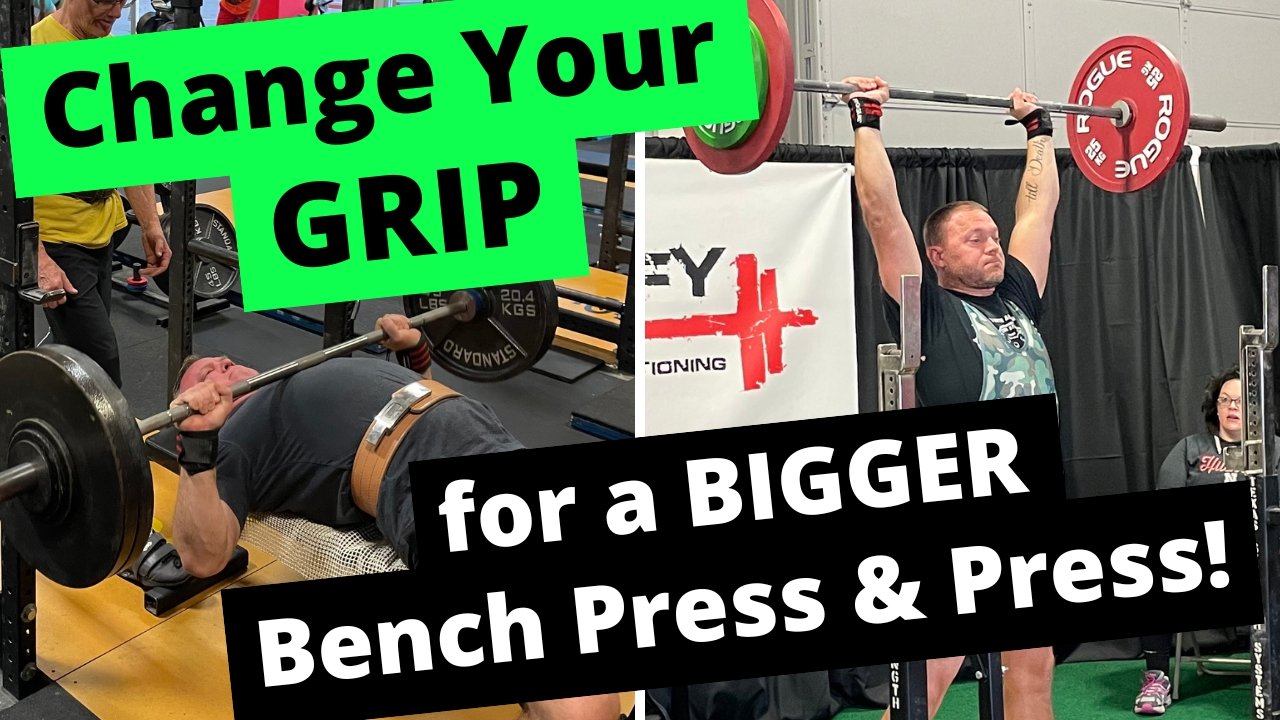
Use This Grip for a BIGGER Bench Press and Press!
Change your grip. Change your life . . . or at least your benching and pressing. What is a compression grip, and why should you use it for the bench press and the press? Click here to read.

Blast from the Past: How to Box Squat Correctly (and why to do them!)
What are box squats, how do you perform them, and why might a lifter do them? Phil explains. Click here to watch.
Blast from the Past: 4 Easy Ways to Load Your Deadlift
Loading and unloading the barbell for your deadlifts can be a pain, so we give you 4 different ways to make this process easier. Click here to read.

NEW TESTIFY HOODIES ARE AVAILABLE!
Looking to train in style and comfort this winter? Get yourself a Testify hoodie - in practically any color! Get yours today and represent your favorite gym.
Click here to head to the Testify Store.
WHAT'S COMING UP
Reminder: We will be closed for training on Saturday, 12/02/23, as we are hosting the annual Testify Christmas Classic weightlifting meet.
Below are a few of our upcoming events, and you can find out what else is on the calendar by heading to our events page at www.testifysc.com/events.
Testify Christmas Classic
December 2, 2023
Come on out and join us for the annual Testify Christmas Classic! This is a weightlifting meet, so the contested lifts are the snatch and clean-and-jerk.
Click here for more information.
Testify Leprechaun Lift-off
March 16, 2024
Want to join us for the annual Testify Leprechaun Lift-off? Of course you do! This is a weightlifting meet, so the contested lifts are the snatch and clean-and-jerk.
Click here to register or for more information.
Testify Strengthlifting Challenge
April 6, 2024
The annual Testify Strengthlifting Challenge is back, and we invite you to be a part of it! This is a strengthlifting meet, which means the contested lifts will be the squat, press, and deadlift.
Click here to register or for more information.
THIS WEEK’S CONDITIONING
Option 1
Sled
Outdoors:
10 rounds of:
Push sled 100 ft
Pull sled 100 ft (hand over hand)
Indoors:
20 rounds of:
Push sled 50 ft
Pull sled 50 ft (hand over hand)
Compare to 2023.09.25.
Option 2
Bike/row:
4 x 800m
Rest 3 minutes between each round. Score = slowest time.
Compare to 2023.09.04.
Option 3
1. 5 x 50 ft seated sled pull. Add weight each round. Rest as needed.
2. 5 x 100 ft duck walk. Add weight each round. Rest as needed.
Compare to 2023.08.07.
Option 4
Outdoors
4 rounds:
50 yd farmer carry
80 m sled drag
Rest 2 min
Indoors
4 rounds:
100 ft farmer carry
100 ft sled drag
Rest 2 min
Compare to 2023.08.07.
Use This Grip for a BIGGER Bench Press and Press!
/Want a bigger bench? A bigger press? Of course you do. Let’s get right to it.

figure 1: Compression grip (bench press configuration)
This article is the first in our short series on the correct grip for each lift - from pushing movements like a bench press or a press to pulling movements like a deadlift or a row, and we’ll also discuss the differences that come into play when you have an Olympic movement like a snatch or clean.
Today’s Topic: Pushing Movements
The grip we are covering today is the type of grip you would take for the bench press (Figure 1), the press, the incline bench press, the close grip bench press, etc. This grip is commonly referred to as a compression grip.
An important concept to remember is that - and this is true for both pushing and pulling movements - gravity alway wants objects to move downward.
This includes the barbell that’s in your hands, so when you’re pushing on the bar, you don’t want to put the bar in a position that permits the bar to accidentally reach a lower position (in your hands) than the position it’s already occupying. In other words, make sure that the bar is in the lowest, stable position you can achieve . . . right from the start.

figure 2: Do not put the bar up here.
What NOT To Do
For example, when you unrack the press, don’t support the barbell up high in the hand (Figure 2). If you do this with a heavy weight, it’s simply going to bend your wrist backward (thus lowering the bar). As a result, your flimsy, little, dainty, baby wrists are in a rather unstable position of extreme extension (Figure 3).
You’ve created an energy leak, and this is not a productive position from which to press or bench heavy weights. What to do?

figure 3: wrists in extreme extension - don’t be like this fool.

Figure 4
The Answer
Before unracking either the press or the bench, get the bar sitting over the base of the palms - not up by the base of your fingers, but at the base of your actual hand (Figure 4).
This position permits the bar to be stacked right over the bones of the forearms, which is excellent for force transfer.
From here, pronate your grip just enough that your thumbs can grip the bar (Figure 5). This positions the thumbs so that they can wrap around the bar in the opposite direction of the rest of your fingers.
Squeeze the bar tightly, and that’s it - this is your grip (Figure 6).

figure 5: pronate the grip slightly until the thumbs are below the bar.
The Result
This grip permits the bar to sit deep in the base of your palm - whether you’re benching or pressing. Your wrists are as straight as they can be, although they won’t be entirely straight - let’s call it a neutral position.
As a side not, wrist wraps can help achieve and maintain this position, but they shouldn’t be a crutch - learn to achieve the correct position without wraps, and then start using wraps as your work weights get heavier.

Figure 6: squeeze the bar tightly.
The wrists certainly are no longer bent back in extreme extension, and they also aren’t so straight that it feels like the bar is pushing down on the webbing of your thumb.
As previously mentioned, the bar is now positioned right over the bones of the forearm (Figure 7), which makes for efficient force transfer between your arms, hands, and the bar, and this makes for a stronger press or bench press.

figure 7: compression grip (press width)
Next up - the tension grip.
As always, we hope these tips help you get stronger and live better.
-Phil
PS: Whenever you want even more Testify in your life, here are some free resources:
Follow Testify on Instagram HERE.
Subscribe to Testify’s YouTube channel HERE.
Book a free intro and strategy session with us HERE.
Pick up a free copy of Testify’s Squat Guide: 12 Tips to Improve Your Squat Now HERE.
Get our free weekly email - containing useful videos, articles, and training tips - HERE.
(Some links may be affiliate links. As an Amazon Associate, Testify earns from qualifying purchases.)