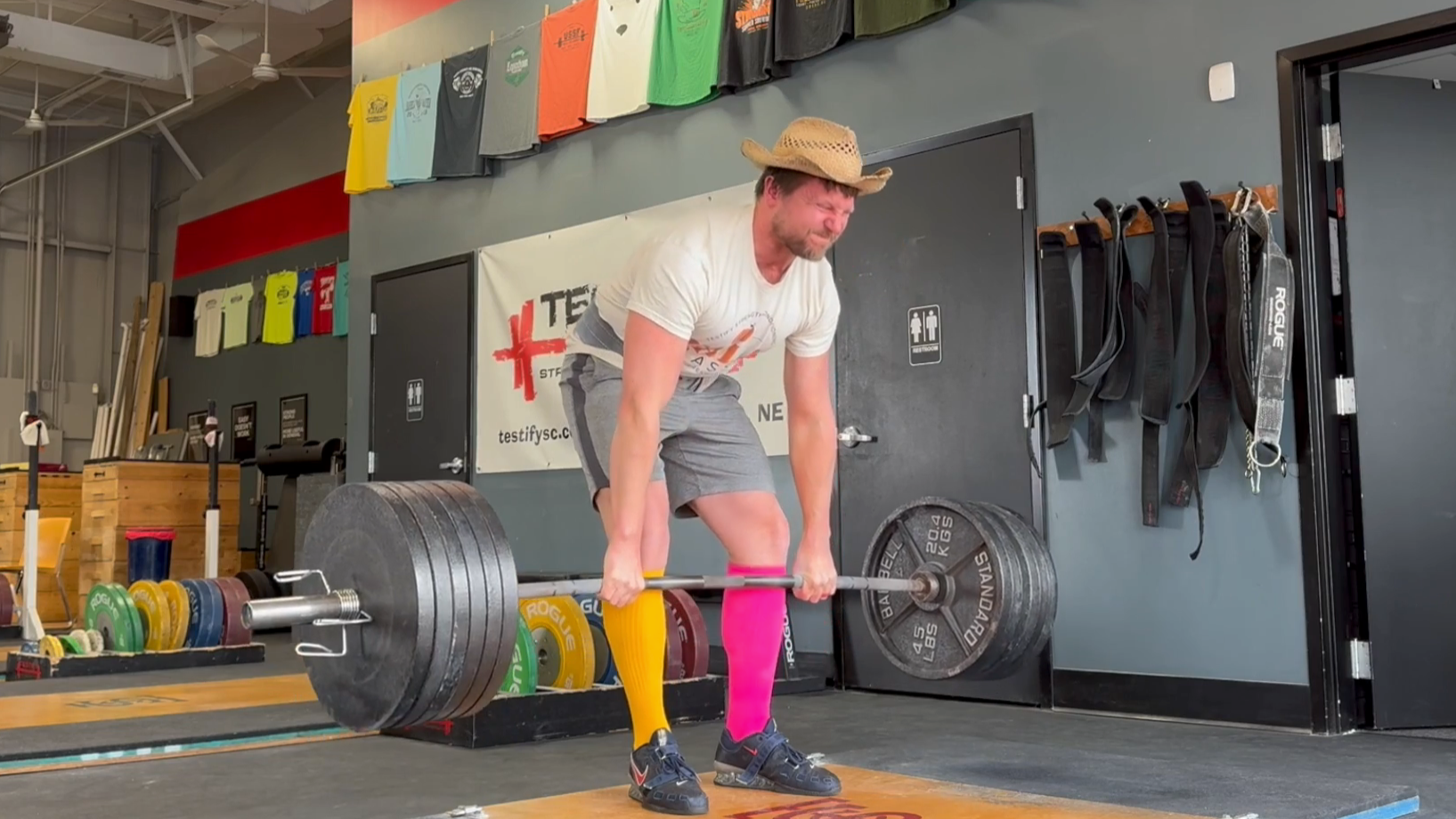
The TRUTH About Lifting (What No One Tells You!)

Starting Strength Coach Phil Meggers briefly covers why lifting weights is pretty stupid and - more importantly - why it isn't.

(A Blast from the Past video originally published on 04/24/23)

Whenever you want even more Testify in your life, here are some free resources:

  • Book a free intro and strategy session with us HERE.

  • Pick up a free copy of Testify’s Squat Guide: 12 Tips to Improve Your Squat Now HERE.

  • Get our free weekly email - containing useful videos, articles, and training tips - HERE.

  • Follow Testify on Instagram HERE.

  • Subscribe to Testify’s YouTube channel HERE.


At Testify, we offer small group training, private coaching (in-person or remotely via Zoom), online coaching, and form checks. Interested in getting stronger, looking better, and having more energy?

Barbell Rings - What Are These Things For?!

(A Blast from the Past article originally posted on 08/27/21)

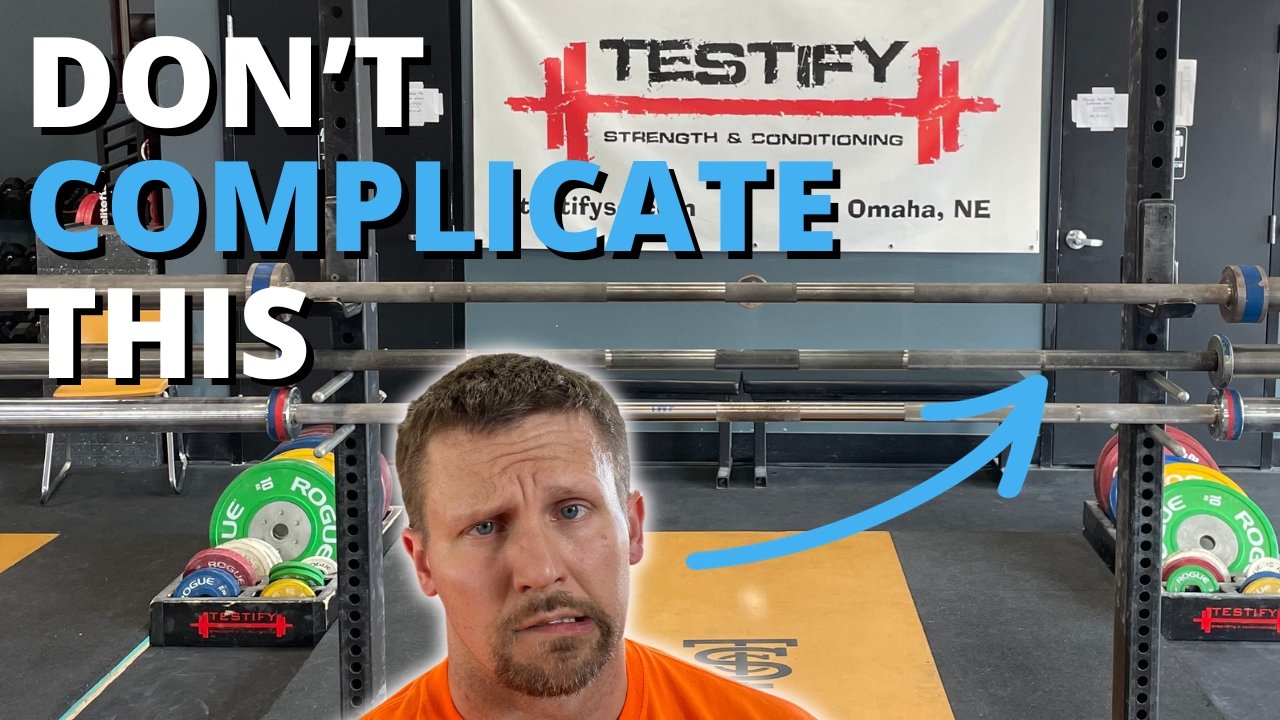
Every barbell has one or two pairs of rings - also known as score marks or knurl marks. Today, we’re going to talk about the two types of rings, the purpose of the rings, and how they might pose a problem for a new or inexperienced lifter.

For further explanation and demonstration of the topics covered in this article, be sure to check out any of the included videos.

From top to bottom - barbells with (A) power rings only, (B) weightlifting and powerlifting rings, and (C) weightlifting rings only

From top to bottom - barbells with (A) power rings only, (B) weightlifting and powerlifting rings, and (C) weightlifting rings only

The 2 Types of Rings
Using a dual-ringed bar (i.e., a bar with both sets of rings) for reference, the inner rings are known as the powerlifting rings or simply the power rings, and these marks are 81 cm apart (approximately 32 in). The outer rings are known as the weightlifting rings or the olympic rings, and these marks are 91 cm apart (approximately 36 in).

Purpose
Both sets of rings are used for reference points when you take your grip on the bar. In the sport of powerlifting, the power rings on a dedicated powerlifting barbell (or “power bar”) represent the maximum legal grip width for the bench press (i.e., at the widest legal grip, the index fingers still need to be in contact with the rings). In lifts other than the bench press (e.g., the squat) the rings still serve as a reference point upon which to base your grip.

In the sport of weightlifting - i.e., the snatch and clean-and-jerk - due to the wider grip widths used in the clean, the jerk, and specifically the snatch, it is useful to have a wider set of rings for reference, and thus, the weightlifting rings are set a bit wider than the power rings.

The Problem
A potential problem arises when a lifter switches from one barbell to a different barbell. Suppose, for example, that Jack is accustomed to training on a bar that only has one set of rings, and then he travels somewhere and ends up using a dual-ringed bar. Suddenly, Jack’s not sure which set he should be using for his reference point for his grip. 

Conversely, let’s say Jill has been training with a dual-ringed bar, and then she goes to her first competition, and the competition bar only has one set of rings. As Jill steps onto the competition platform, she isn’t sure whether she’s looking at the power rings or the weightlifting rings.

The solution here is pretty simple - know your equipment. If you’re not sure which rings you’ve been using, you can easily figure it out. If it’s a dual-ringed bar, you hopefully already know whether you’ve been using the inner set or outer set, and if it's a single-ringed bar, break out your tape measure and check the distance between the rings - the powerlifting rings are 32 inches apart (81 cm) while the weightlifting rings are 36 inches apart (91 cm).

If you have to go train or compete on a different bar, know the following points:

  • At a powerlifting meet, you’ll either encounter a power bar (i.e., a bar with power rings) or a bar with both sets of rings (less common at a meet).

  • At a weightlifting meet, you’ll either encounter a weightlifting bar (i.e., a bar with weightlifting rings) or a bar with both sets of rings (again, less common at a meet).

  • In general training, if you encounter a single-ringed bar, you’re probably - probably - looking at the power rings as these bars are far more common than dedicated weightlifting bars.

  • While the above points are useful, your best bet is to still measure.

Knowing these facts, you can keep your technique reproducible and therefore consistent wherever you go. 

As always, we hope this helps you get stronger and live better.

-Phil

PS: Whenever you want even more Testify in your life, here are some free resources:

  • Follow Testify on Instagram HERE.

  • Subscribe to Testify’s YouTube channel HERE.

  • Book a free intro and strategy session with us HERE.

  • Pick up a free copy of Testify’s Squat Guide: 12 Tips to Improve Your Squat Now HERE.

  • Get our free weekly email - containing useful videos, articles, and training tips - HERE.

(Some links may be affiliate links. As an Amazon Associate, Testify earns from qualifying purchases.)


At Testify, we offer small group training, private coaching (in-person or remotely via Zoom), online coaching, and form checks. Interested in getting stronger, looking better, and having more energy?

Most Squat Advice Ignores These Three Conceptual Errors

You can’t fix what you don’t understand. Starting Strength Coach Phil Meggers covers three conceptual errors that show up frequently, why they're wrong, and how to easily correct them.

Whenever you want even more Testify in your life, here are some free resources:

  • Book a free intro and strategy session with us HERE.

  • Pick up a free copy of Testify’s Squat Guide: 12 Tips to Improve Your Squat Now HERE.

  • Get our free weekly email - containing useful videos, articles, and training tips - HERE.

  • Follow Testify on Instagram HERE.

  • Subscribe to Testify’s YouTube channel HERE.


At Testify, we offer small group training, private coaching (in-person or remotely via Zoom), online coaching, and form checks. Interested in getting stronger, looking better, and having more energy?

The Testify Star - March 2, 2026

THIS WEEK'S SUBMISSION

From our video The Gym Gear Nobody Talks About... But Everyone Needs. (click the title to watch):

MrJake719
Hello! I’ve been to a couple of your camps, and the last one you commented that I pushed the cues a little too far. That was great feedback. The one I’m trying to correct is pushing my Kees out too far on squat. Do you have a solo lifter cue to keep knees right above toes? Thanks!

Phil
Hey there, Jake - good to hear from you! If you're shoving the knees apart too far (i.e., knees tracking outside your toes), you can cue "knees forward" or even "knees in" (that's a bit of an overcue, but it can be useful).

Also, you might try watching the video we did a while back on the TUBOW and using that to help the problem:
TUBOW: The Portable Squat Coach
https://youtu.be/_wEF-YDesaw

MrJake719
@T@TestifySCI’ll try it, thank you. Take care!

Phil
You're welcome, and you as well!

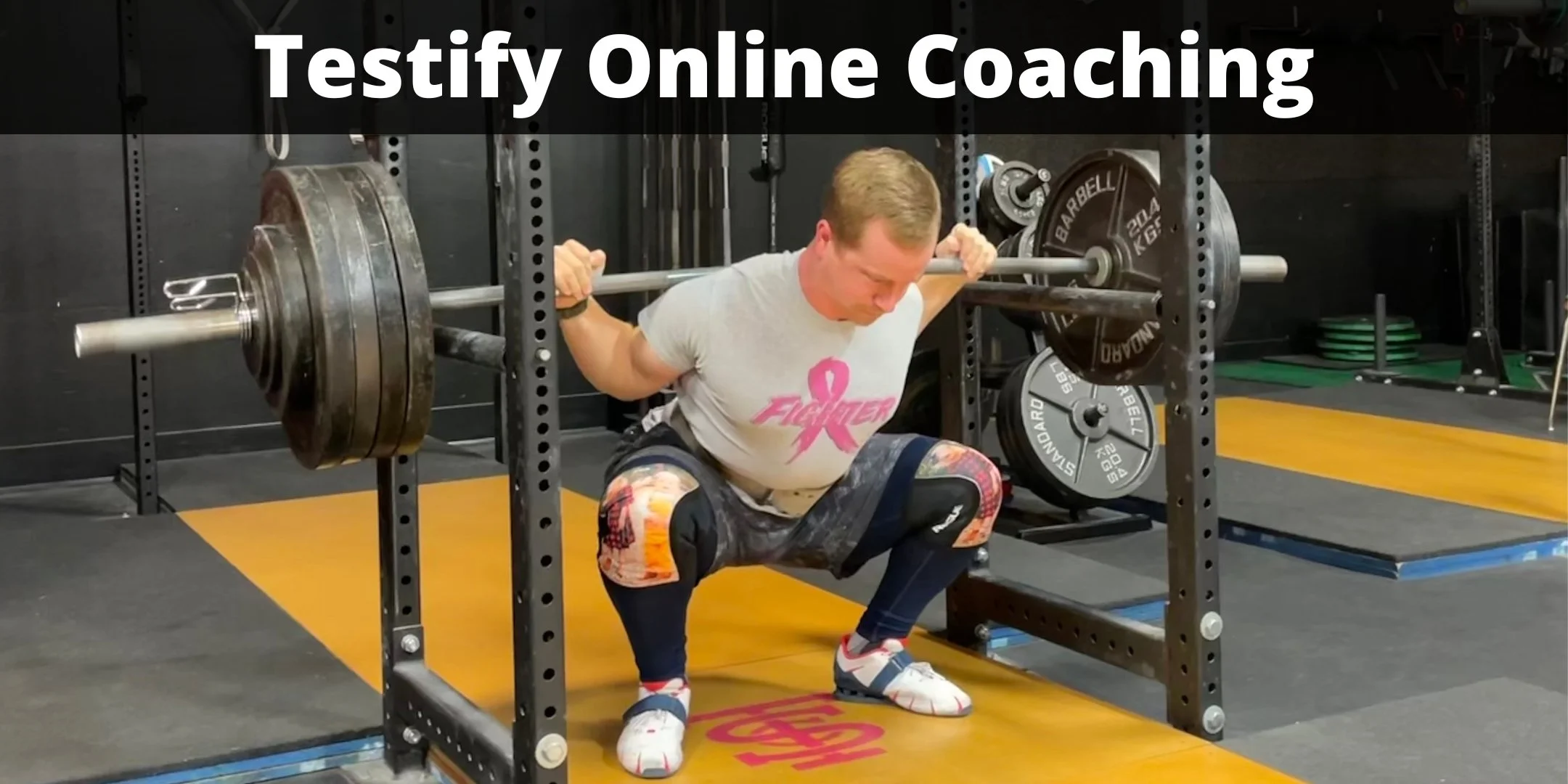
TESTIFY ONLINE COACHING

Interested in getting stronger working one-on-one remotely with us? Click here to book your free strategy session.

Get Stronger. Live Better. Start Today.


ARTICLES & VIDEOS

The Gym Gear Nobody Talks About... But Everyone Needs.
Anyone can show up and lift. Training, however, requires intention - and a few specific items almost no one talks about. We break down the overlooked gym gear that makes the difference between exercising and actually getting stronger. Click here to watch.


Stop Using Your Arms to Deadlift
Don't make this mistake with your arms when you deadlift. Phil covers how to identify the problem as well as how to fix it. Click here to read.


Blast from the Past: Never Make This Squat Mistake Again! | Fast Fix
This squat mistake either makes you look ignorant or it makes you look like you're compensating for something. Either way, it's not a good look. Let’s fix it. Click here to watch.


Blast from the Past: Why Your Press is Weak: Fix Your Unrack and Grip with this Simple Mnemonic Device
Struggling with the press? Phil gives you a simple mnemonic device to help you fix your unrack and your grip - it'll pay big dividends. Click here to read.


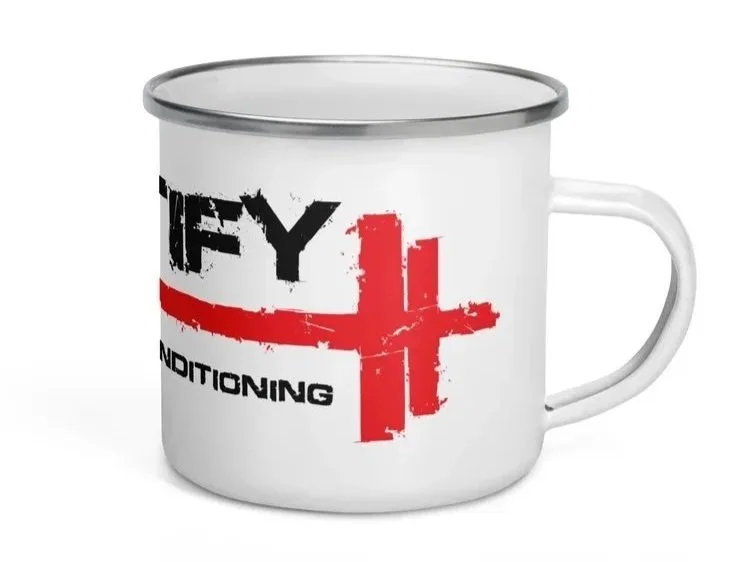
TESTIFY CAMPFIRE MUGS ARE AVAILABLE!

For lifters who train hard . . . and like a little campfire-style to go along with their training sessions. Durable, no-frills, and proudly wearing the Testify logo. From campsite to squat rack, this mug's for you.

Click here to head to the Testify Store.


WHAT'S COMING UP

Below are a few of our upcoming events, and you can find out what else is on the calendar by heading to our events page at www.testifysc.com/events.

Testify Strengthlifting Challenge

  • April 11, 2026

  • The annual Testify Strengthlifting Challenge is back, and we invite you to be a part of it! This is a strengthlifting meet, which means the contested lifts will be the squat, press, and deadlift.

  • Click here to register or for more information.

Testify Barbell MAYhem - The Clean & Press Classic

  • May 1, 2026

  • The annual Barbell MAYhem is back, and this year's event is a Friday night clean-and-press!

  • This is a single-lift weightlifting meet wherein competitors will perform the clean-and-press. Each lifter will receive 3 attempts, and the heaviest successful lift will determine their score.

  • There will be prizes - for feats both serious and outlandish - throughout the night!

  • Click here to register or for more information.


THIS WEEK’S CONDITIONING

Option 1
Sled
Outdoors:
10 rounds of:
Push sled 100 ft
Pull sled 100 ft (hand over hand)

Indoors:
20 rounds of:
Push sled 50 ft
Pull sled 50 ft (hand over hand)

Compare to 2026.01.26.

Option 2
Bike/row:
5 min on
4 min off
4 min on
3 min off
3 min on
2 min off
2 min on
1 min off
1 min on

Record distance for each interval and add for total distance.

Compare to 2025.12.08.

Option 3
5-10 rounds of:
30 sec ME tire flips
30 sec rest

Compare to 2025.11.10.

Option 4
Sandbag-over-bars
Set yoke at #33 for women or #35 for men.
1. 1 minute AMRAP
2. 5 rounds of 2 reps every 2 minutes (speed!)
3. 1 minute AMRAP

Weights
Female under 40 years
140 lbs and under: 75 lbs
140.1 lbs – 185 lbs: 100 lbs
185.1 lbs and over: 150 lbs

Female 40 years and over
140 lbs and under: 50 lbs
185 lbs and under: 75 lbs
185.1 lbs and over: 100 lbs

Male under 40 years
185 lbs and under: 150 lbs
185.1 lbs – 235 lbs: 200 lbs
235.1 lbs and over: 250 lbs

Male 40 years and over
185 lbs and under: 100 lbs
185.1 lbs – 235 lbs: 150 lbs
235.1 lbs and over: 200 lbs

Compare to 2025.11.10.


As always, we hope this helps you get stronger and live better!

Whenever you want even more Testify in your life, here are some free resources:

  • Book a free intro and strategy session with us HERE.

  • Pick up a free copy of Testify’s Squat Guide: 12 Tips to Improve Your Squat Now HERE.

  • Get our free weekly email - containing useful videos, articles, and training tips - HERE.

  • Follow Testify on Instagram HERE.

  • Subscribe to Testify’s YouTube channel HERE.

Stop Using Your Arms to Deadlift

Your arms are not for pulling.

Not in the deadlift, anyway. Let’s use the squat to shed some light on today’s deadlift mistake.

Gravity likes things to be as low as possible, so to be stable in the squat, you stand with the entire sole of your shoe resting firmly on the ground.

You certainly do not squat on your toes with the heel of your shoe up in the air. Squatting in such a silly fashion means that your squishy, wobbly ankle ruins the efficiency of force transfer between you and the floor.

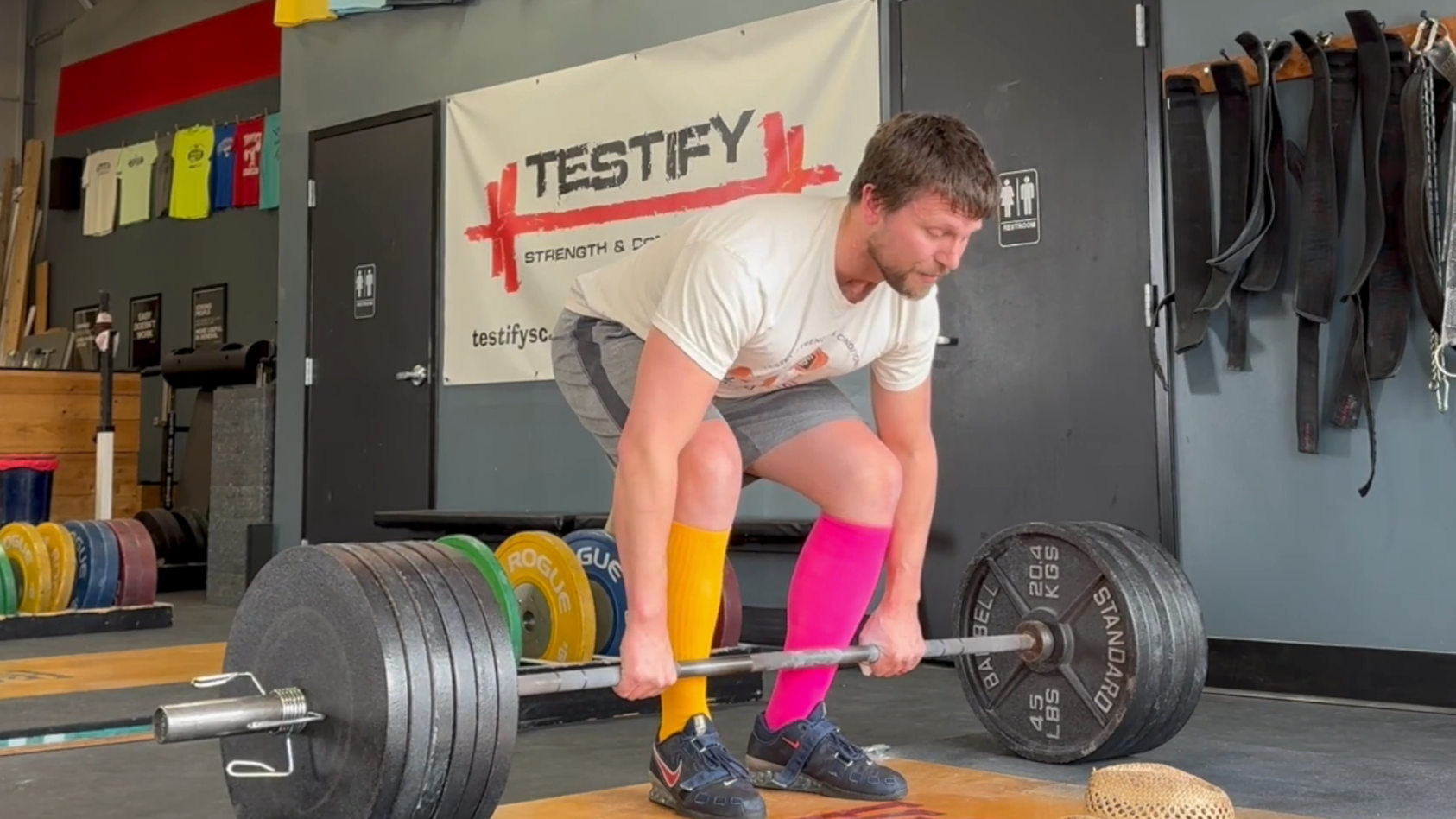
figure 1: don’t bend your elbows like this fool.

In the deadlift, an analogous error is pulling with flexed arms , i.e., bent elbows (Figure 1). This mistake shows up with both new and experienced lifters, and it makes the deadlift less efficient and harder than it should be.

(If you’d like to see both this error and its solution demonstrated, check out the short video below.)

In the 5-step deadlift setup, this problem usually occurs during step 4 – the “squeeze your chest up to set your back flat and rigid” step. If you commit this error, you are attempting to apply tension to the barbell as you set your back, which is good, but you’re doing so by actively pulling with your arms, which is bad for two reasons.

First, flexed arms give your shorter arms, and shorter arms are your enemy in the deadlift. You want long, straight out arms.

Second, you’ve created a force transfer inefficiency – a force transfer leak. Bent arms are weak and deformable, so they absorb some of the force that should be transmitted directly to the bar. Long, straight arms (Figure 2), however, are nondeformable, very strong indeed, and transmit force efficiently.

figure 2: long, straight arms . . . much better.

Bent arms make lift less efficient and actually feel heavier and harder to pull than it otherwise would with straight arms, so let’s fix this.

First, simply cue yourself, “Long arms,” when you squeeze your chest up to set your back.

If that doesn’t work well, try the reminder, “Straight arms.”

Another option is to tell yourself to “stretch out the arms” when you set your back (or even “Go go Gadget arms!” if you’re old enough to get that cartoon reference). The concept of stretching the arms leads us to the fourth cue . . .

“Get away from the bar.”

When you squeeze your chest up to set your back, you are obviously still connected to the bar via your hands, but you should be actively trying to move upward and away from the bar as you lift your chest. Flexing your arms pulls you down closer to the bar, so this cue has the opposite effect and helps you stretch the arms long and straight.

Don’t bend your arms when you deadlift. Don’t create a force transfer leak. Don’t give yourself stubbly little arms.

Your deadlift will thank you for it.

As always, we hope this helps you get stronger and live better.

-Phil

PS: Whenever you want even more Testify in your life, here are some free resources:

  • Book a free intro and strategy session with us HERE.

  • Pick up a free copy of Testify’s Squat Guide: 12 Tips to Improve Your Squat Now HERE.

  • Get our free weekly email - containing useful videos, articles, and training tips - HERE.

  • Follow Testify on Instagram HERE.

  • Subscribe to Testify’s YouTube channel HERE.

(Some links may be affiliate links. As an Amazon Associate, Testify earns from qualifying purchases.)


At Testify, we offer small group training, private coaching (in-person or remotely via Zoom), online coaching, and form checks. Interested in getting stronger, looking better, and having more energy?

NEVER Make This Squat Mistake Again! | FAST FIX

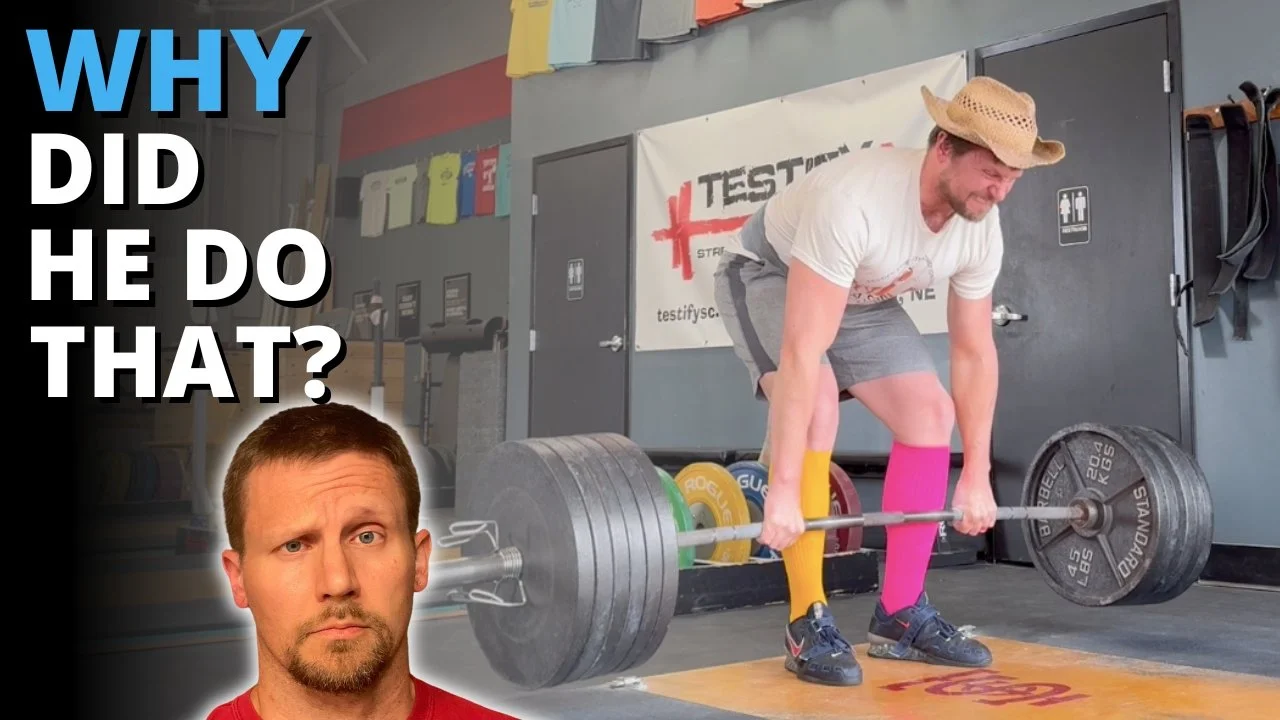
This squat mistake either makes you look ignorant or it makes you look like you're compensating for something. Either way, it's not a good look. Starting Strength Coach Phil Meggers helps you fix it.

(A Blast from the Past video originally published on 04/22/23)

Whenever you want even more Testify in your life, here are some free resources:

  • Book a free intro and strategy session with us HERE.

  • Pick up a free copy of Testify’s Squat Guide: 12 Tips to Improve Your Squat Now HERE.

  • Get our free weekly email - containing useful videos, articles, and training tips - HERE.

  • Follow Testify on Instagram HERE.

  • Subscribe to Testify’s YouTube channel HERE.


At Testify, we offer small group training, private coaching (in-person or remotely via Zoom), online coaching, and form checks. Interested in getting stronger, looking better, and having more energy?