The Deadlift: Follow the Bar

This is hideous (on multiple levels). Don’t be like this fool.

(A Blast from the Past article originally posted on 03/04/22)

Lowering the deadlift should be rather easy - after all, the tough part of the lift is already done, right? With that being said, setting the barbell down after the deadlift is locked out can be tricky for some lifters, especially new lifters.

Figure 1: How NOT to lower the deadlift. This nincompoop is trying to keep his torso vertical on the way down.

This is usually due to a misguided desire to keep the back as vertical as possible on the way down (Figure 1), although we’ve also seen it happen because someone is nervous about bending over with a heavy weight in hand.

Here’s a cue that can help simplify the process and potentially remove some nervousness: Follow the bar down.

At the top of the deadlift, you’ve already picked up the bar, which you know is the hardest part, and you were very bent over during a good portion of that process, so you also know - at least intellectually - that bending over again as you set it down should be even easier. But it’s sometimes tough to convince our bodies to follow that logic and actually bend over, so if the usual “hips back and bend at the the hips” cue isn’t working for you, just tell yourself to follow the bar down to the floor.

Figure 2: This . . . is much better. Hips back, chest down, and simply follow the bar down.

In other words, gravity will take the bar straight down to the floor, and you’re simply following the bar by keeping your hands attached to it (Figure 2).

Now, you’re not dropping the bar, but it should be relatively fast on the way down, and if thinking of the process as a controlled drop helps - at least for now - then go ahead and think of it that way. Simply follow the bar down and keep the rest of your body out of the way.

We hope this helps you get stronger and live better!

(Some links may be affiliate links. As an Amazon Associate, Testify earns from qualifying purchases.)

If you found this helpful, you’ll love our weekly email. It’s got useful videos, articles, and training tips just like the one in this article. Sign up below, and of course, if you don’t love it, you can unsubscribe at any time.


At Testify, we offer small group training, private coaching (in-person or remotely via Zoom), online coaching, and form checks. Would you like to get quality coaching from a Starting Strength Coach?

click here to start today

How to Squat with BAD KNEES | Knee Pain? Follow these 9 Tips

Do you have knee pain when squatting? Phil provides 9 tips to help you squat with less pain.


At Testify, we offer small group training, private coaching (in-person or remotely via Zoom), online coaching, and form checks. Click the button below to get quality coaching from a Starting Strength Coach and start getting stronger TODAY.

Click here to start today

Testify Independent - March 25, 2024

THIS WEEK'S SUBMISSION

From our video DIY Dip Belt (AKA Chinning Belt) - Easy and Cheap! (click the title to watch):

Taric TheGemKnight
Saw this Russian today at the local park with a contraption instead of a belt and he apparently used something similar to this. Not the easiest find, but literal gold this video, cheers!

Phil
Glad it helped!


TESTIFY ONLINE COACHING

Want to get stronger working remotely with one of our Starting Strength Coaches? We have a few openings, so if you’re interested, click here to contact us and learn more.

Get Stronger. Live Better. Start today.


ARTICLES & VIDEOS

STOP Doing This!! Your Shoulders are DESTROYING Your Bench Press
Using your shoulders incorrectly in the bench press? Let's fix it quickly to add pounds to your bench. Click here to watch.


How to Deadlift: Set Your Back the RIGHT Way - Part 2
Do you have a tough time setting your back when you deadlift? In Part 2 of this series, Phil walks you through how to solve this problem. Click here to read.


Blast from the Past: Improve Your Press by FIXING This Problem!
Pushing the hips forward or incorrectly throwing the shoulders back when pressing? With Becky's help, Phil covers an easy way to check for the correct movement. Click here to watch.


Blast from the Past: Improve Your Squat in ONE Easy Step!
Want to improve your squat with one simple and easy tactic? You might not like it, but it's darn effective. Click here to read.


NEW TESTIFY HOODIES ARE AVAILABLE!

Looking to train in style? Get yourself a Testify hoodie - in practically any color! Get yours today and represent your favorite gym.

Click here to head to the Testify Store.


WHAT'S COMING UP

Reminder: We will be closed for training on Saturday, 04/06/24, as we are hosting the annual Testify Strengthlifting Challenge.

Below are a few of our upcoming events, and you can find out what else is on the calendar by heading to our events page at www.testifysc.com/events.

Testify Strengthlifting Challenge

  • April 6, 2024

  • The annual Testify Strengthlifting Challenge is back, and we invite you to be a part of it! This is a strengthlifting meet, which means the contested lifts will be the squat, press, and deadlift.

  • Click here to register or for more information.

Testify Barbell MAYhem

  • May 11, 2024

  • Come on out and join us for the annual Testify Barbell MAYhem! This is a weightlifting meet, so the contested lifts are the snatch and clean-and-jerk.

  • Click here for more information.

Starting Strength Self-Sufficient Lifter Camp

  • May 18, 2024

  • Spend the day learning the Squat, Press, and Deadlift and how to self-evaluate your lifts while training in your garage or commercial gym without a coach.

  • Click here to register or for more information.


THIS WEEK’S CONDITIONING

Option 1
Sled Pyramid – 4, 5, or 6 tiers
Go up and down a 4, 5, or 6 tier “sled pyramid” – rest as needed. The distance for each round is 80 m indoors (a down-back on the 40m course) or 200 ft outdoors (2 down-backs on the 50 ft course). Rest as needed.

For example, Bob does the following (4 tiers):
Round 1: Empty sled
Round 2: 25#
Round 3: 50#
Round 4: 75#
Round 5: 50#
Round 6: 25#
Round 7: Empty sled

Compare to 2024.01.22.

Option 2
Bike/row:
8 x 30 sec on/2:00 off

Score = least distance covered in any 30 second interval

Compare to 2024.01.01.

Option 3
Outdoors:
5-10 rounds:
50 yd sled push (25 yd down-back)
50 yd farmer carry (25 yd down-back)
Rest 1 min

Indoors:
5-10 rounds:
100 yd sled push (50 ft down-back)
100 yd farmer carry (50 ft down-back)
Rest 1 min

Compare to 2023.12.04.

Option 4
Row 10 x 100m
Rest 1 min between sprints. Your score is your slowest time.

Compare to 2023.12.04.

How to Deadlift: Set Your Back the RIGHT Way - Part 2

The Problem
When we deadlift, you want your back in flat and rigid extension before you pull the barbell off the floor, but this can be difficult to do (with the result being a soft, semi-rounded back as seen in Figure 1). With this in mind, welcome to Part 2 in our series on how to accomplish exactly that.

Figure 1: Not like this . . . not like this.

In Part 1, we covered how to use the cue that’s already present in the 5-step deadlift setup - i.e., “squeeze your chest up” - the idea being that applying this cue sets off a wave of contraction that runs from your thoracic spine all the way down to your lumbar spine and thus gets your back rigid and flat (Figure 2).

However, if that cue isn’t working well for you and your back is still a bit rounded, try the following cue instead . . .

Figure 2: This . . . is much better.

Cue #2: Push Your Belly Down Between Your Thighs.
If you push your stomach down between your thighs (you can also cue “push your belly down between your femurs”), you’re going to get a nice, tight, flat, rigid back (Figure 2), which is exactly the type of efficient, force-transferring segment that we want when we deadlift.

Another Way to Picture It
If it helps, you can instead imagine a rope attached to your belly button, and that rope is pulling your belly button down toward the floor (leaving your hips and shoulders exactly where they are).

Hopefully, you found this useful, and we’ll be back in Part 3 of this series in the near future to cover more ways to address this problem.

As always, we hope this helps you get stronger and live better.

(Some links may be affiliate links. As an Amazon Associate, Testify earns from qualifying purchases.)

If you found this helpful, you’ll love our weekly email. It’s got useful videos, articles, and training tips just like the one in this article. Sign up below, and of course, if you don’t love it, you can unsubscribe at any time.


At Testify, we offer small group training, private coaching (in-person or remotely via Zoom), online coaching, and form checks. Would you like to get quality coaching from a Starting Strength Coach?

click here to start today

Improve Your Press by FIXING This Problem!

When using the hips in the press, be careful that you're not throwing your shoulders backward instead of pushing the hips forward like we want. Phil and Becky discuss and demonstrate an easy way to check for the correct movement.

(A Blast from the Past video originally published on 04/30/22)


At Testify, we offer small group training, private coaching (in-person or remotely via Zoom), online coaching, and form checks. Click the button below to get quality coaching from a Starting Strength Coach and start getting stronger TODAY.

Click here to start today

Improve Your Squat in ONE Easy Step!

(A Blast from the Past article originally posted on 02/25/22)

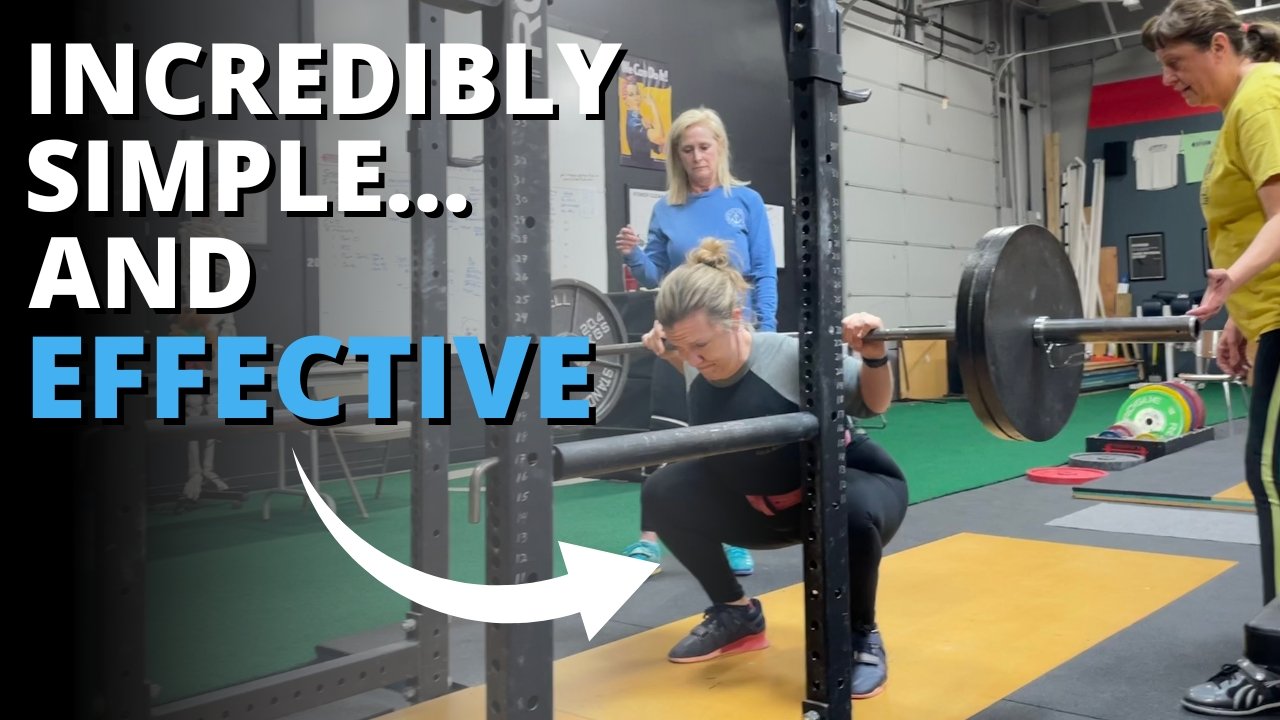
Want to improve your squat in one easy step? It’s ridiculously simple.

Squat with spotters.

Seriously, that’s it. Now, of course, squatting with safeties (AKA pins, crash bars, spotter arms) is just fine, and if you train on your own, that’s the only option you have. However, if you train with some other reasonably intelligent and educated lifters, get two of them to spot you.

One person stands on either side of you (watch the included video for more on how to spot the squat . . . and how not to spot the squat). Do not have a single person spot you from behind because that’s stupid. It’s common, but it’s still stupid (the physics of this situation becomes rather obvious and untenable with heavy loads . . . try holding 300, 400, or 500+ lb out in front of you, and you’ll quickly agree).

You’ll squat better because the pressure of having two people right next to you will force you to do so. You’ll focus better and work harder because you don’t want to fail and make your spotters actually take the bar. You’re using peer pressure for good instead of evil. This is a very real effect, and we see it all the time.

If you’re not used to being spotted when you squat, you probably won’t like it at first, but you’ll get used to it, and in the long run, you’ll squat better for having done it. We hope this helps you get stronger and live better!

(Some links may be affiliate links. As an Amazon Associate, Testify earns from qualifying purchases.)

If you found this helpful, you’ll love our weekly email. It’s got useful videos, articles, and training tips just like the one in this article. Sign up below, and of course, if you don’t love it, you can unsubscribe at any time.


At Testify, we offer small group training, private coaching (in-person or remotely via Zoom), online coaching, and form checks. Would you like to get quality coaching from a Starting Strength Coach?

click here to start today