99% of Lifters Don't Know Which SNATCH to Perform: POWER vs SQUAT vs SPLIT

You have three options for performing the snatch – power snatch, squat snatch, and split snatch. Let’s cover the advantages of each so you can decide which one you should be performing, and as a bonus, we’ll also cover what adding the word “hang” (e.g., “hang power snatch”) means for these three lifts.

#1 Power Snatch
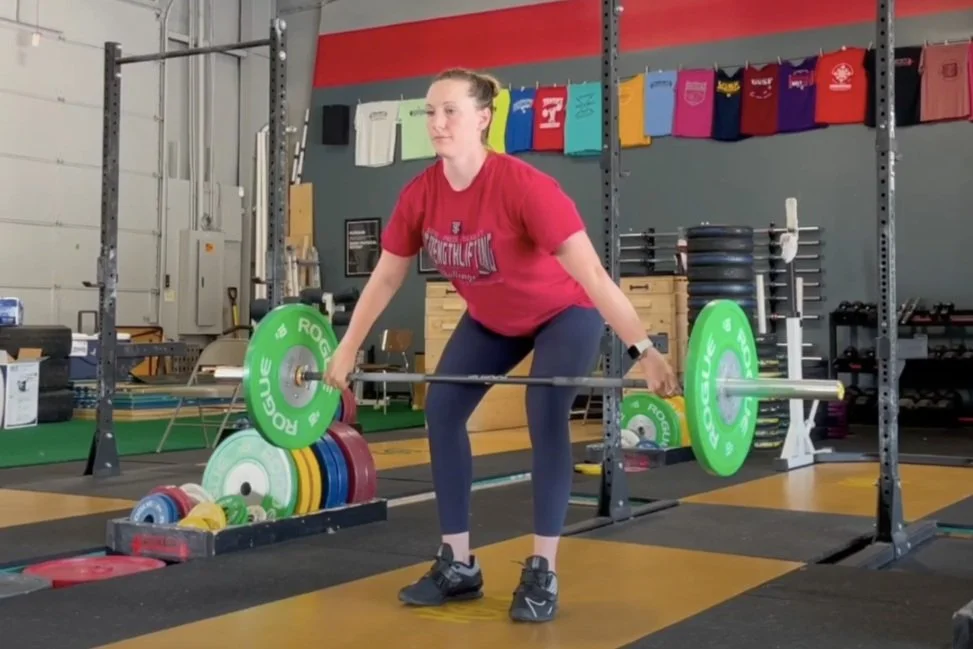
The power snatch starts with the bar on the floor, the bar is accelerated upward, and the lifter then receives the bar overhead, locking it out in a partial depth overhead squat position.

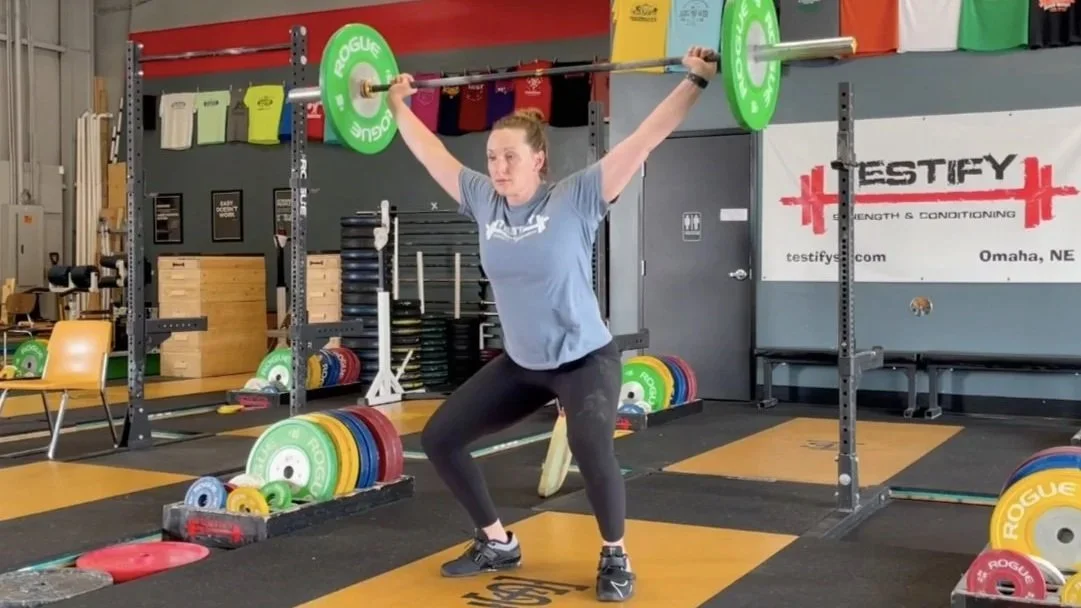
becky demonstrates a power snatch.

When you read or hear “power,” think “partial squat” – both begin with the letter P, so it's a rather handy way to remember the receiving position.

The advantage of a power snatch is that it's the simplest of the three receiving positions (i.e., landing positions) – you don't need to learn to do a full overhead squat as you do in a squat snatch, and your feet don't travel very far as they do in a split snatch. For these reasons, the power snatch is usually the first version of the snatch that we teach, and for general strength trainees or athletes who wish to incorporate snatches into their training, the power snatch is what we typically recommend.

Note: If you’d like to see these snatches demonstrated, watch the short video below.

#2 Split Snatch
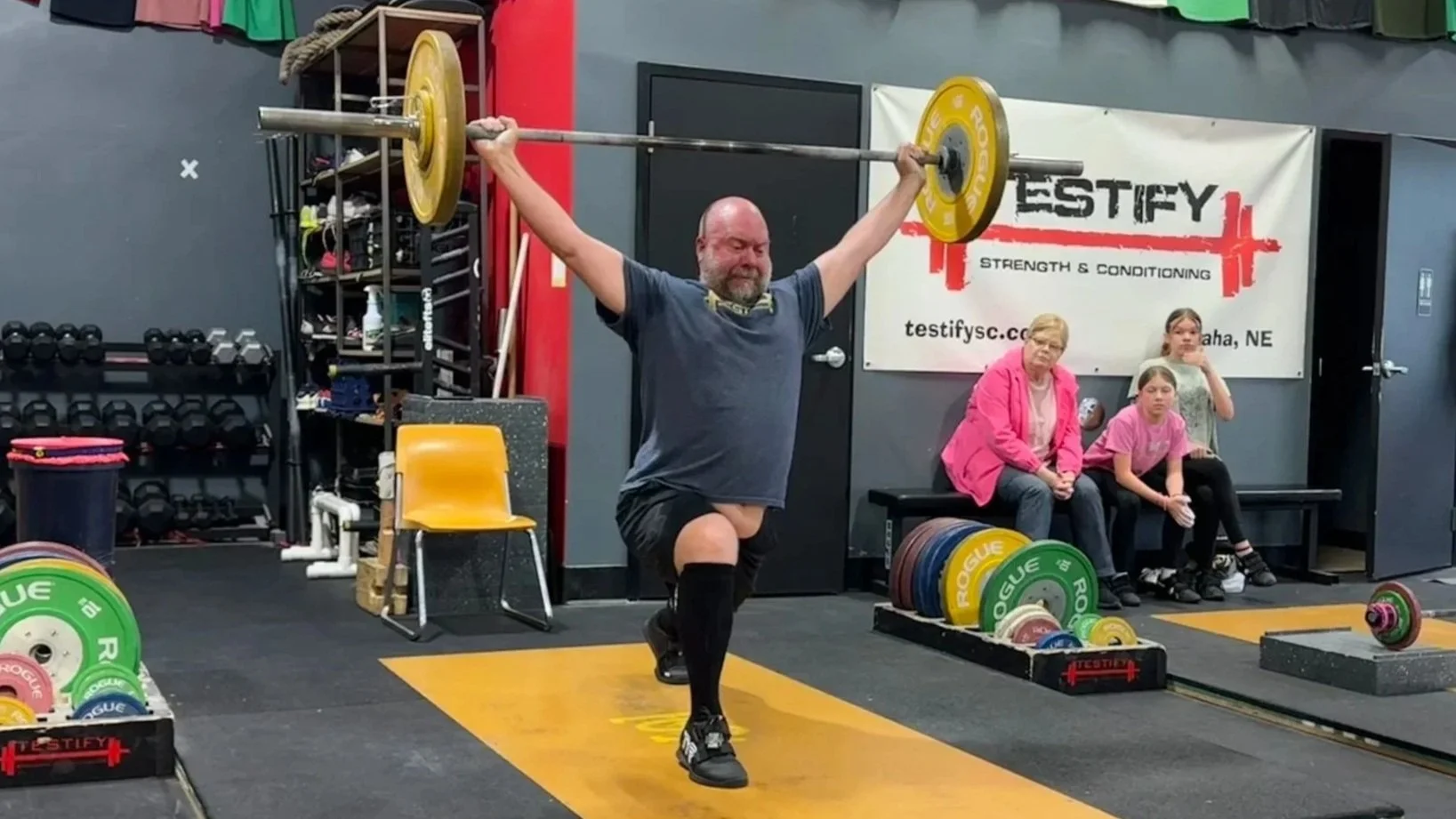
The split snatch starts with the bar on the floor, the bar is accelerated upward, and the lifter then receives the bar overhead, locking it out with the feet in a split position – one foot positioned in front of the torso and one foot positioned behind the torso.

dave demonstrates a split snatch.

The advantages of a split snatch are twofold – first, depending on the length of the split, you can receive the bar at a lower position than that of a power snatch, which helps in terms of lifting heavier loads since you don't have to get the bar as high before racking it

Second, you don't have to execute a full depth overhead squat as you do in a squat snatch, and with this in mind, while the split snatch can be a solid option for lifters of all ages, it is an exceptionally great option for Master's lifters (i.e., older lifters).

#3 Squat Snatch
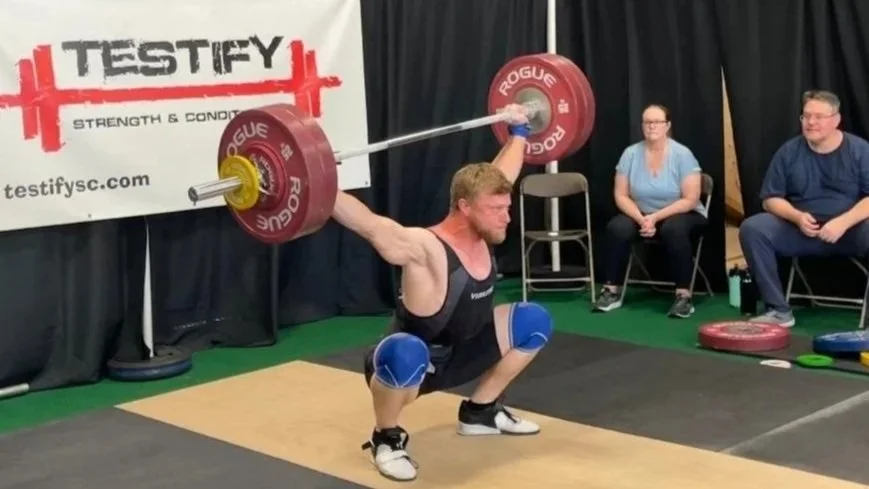
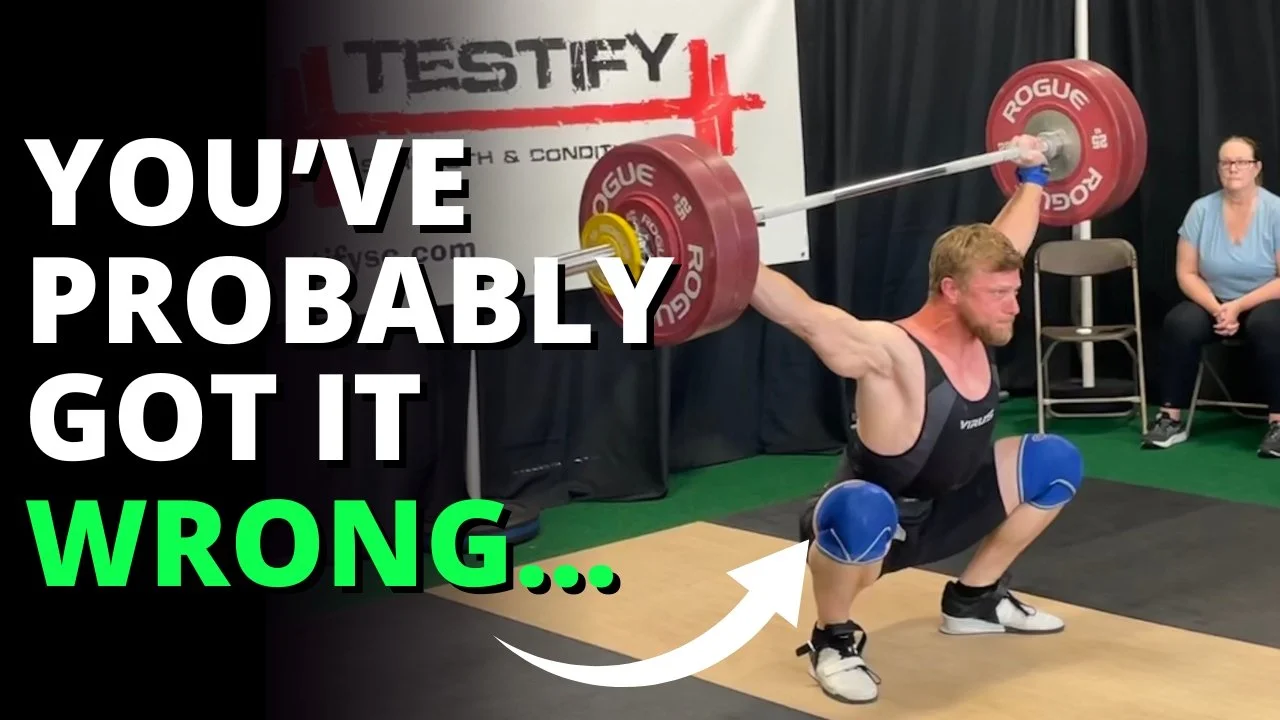
The squat snatch – also known as a “full snatch” and mostly commonly as simply a “snatch” – starts with the bar on the floor, the bar is accelerated upward, and the lifter then receives the bar overhead, locking it out in a full depth overhead squat position.

chris demonstrates a squat snatch.

The advantage of a squat snatch is that it has the lowest receiving position of the three snatches, so you don't have to get the bar as high before racking it when compared to a power snatch or split snatch.

As a result, it is the version of the snatch that is capable of lifting the most weight, and because of this, if you attend a weightlifting meet (AKA Olympic weightlifting meet), the squat snatch is the most common type of snatch that you'll typically see.

Bonus Tip
Power, split, and squat are all receiving (i.e., landing) positions, but the word hang refers to a starting position. Specifically, it means that the lift starts with the bar hanging in the hands instead of with the bar resting on the floor.

As a result, a hang power snatch, hang split snatch, and hang squat snatch all look very similar to the versions covered earlier in this article, but the bar starts hanging in the lifter’s hands instead of resting on the floor.

As always, we hope this helps you get stronger and live better.

-Phil

PS: Whenever you want even more Testify in your life, here are some free resources:

  • Book a free intro and strategy session with us HERE.

  • Pick up a free copy of Testify’s Squat Guide: 12 Tips to Improve Your Squat Now HERE.

  • Get our free weekly email - containing useful videos, articles, and training tips - HERE.

  • Follow Testify on Instagram HERE.

  • Subscribe to Testify’s YouTube channel HERE.

(Some links may be affiliate links. As an Amazon Associate, Testify earns from qualifying purchases.)


At Testify, we offer small group training, private coaching (in-person or remotely via Zoom), online coaching, and form checks. Interested in getting stronger, looking better, and having more energy?

What is a HANG POWER SNATCH? | Olympic Weightlifting Technique

What is a hang power snatch? How is it different from a snatch, power snatch, or hang snatch? Starting Strength Coach Phil Meggers covers it all here in about a minute.

(A Blast from the Past video originally published on 03/25/23)

Whenever you want even more Testify in your life, here are some free resources:

  • Book a free intro and strategy session with us HERE.

  • Pick up a free copy of Testify’s Squat Guide: 12 Tips to Improve Your Squat Now HERE.

  • Get our free weekly email - containing useful videos, articles, and training tips - HERE.

  • Follow Testify on Instagram HERE.

  • Subscribe to Testify’s YouTube channel HERE.


At Testify, we offer small group training, private coaching (in-person or remotely via Zoom), online coaching, and form checks. Interested in getting stronger, looking better, and having more energy?

Snatch vs Power Snatch vs Hang Snatch - What's the Difference?!

Snatch, hang snatch, power snatch, hang power snatch - what are the differences between these lifts, and how can we remember these differences in an easy and practical manner? To sort this out, we first need to understand two words - hang and power.

HANG
Hang refers to a starting position, so if you see the word hang, then you know the lift starts with the bar hanging in your hands. Common hang positions include the mid-thigh, low thigh, above the knee, below the knee, and even mid-shin, but most often (without any other specific qualifiers), hang typically refers to a start position at the mid to low thigh.

Finally, note that if you don’t see the word hang, then you know the lift starts with the bar resting on the floor.

POWER
Power refers to a landing position (AKA receiving position), i.e., the position in which you catch or rack the bar. When you see the word power, simply think partial squat (tip: power and partial both start with the letter “p”). Thus, if you see the word power, you’re going to receive the snatch in a partial depth overhead squat. If you don’t see the word power, then you know you’re going to receive the snatch in a full depth overhead squat.

Now that you’ve got those two terms down, it’s time for the actual lifts . .

SNATCH (AKA squat snatch or full snatch)
Since you don’t see the word hang, the bar starts on the floor, and since you don’t see the word power, it’s not received in a partial squat and is therefore received in a full depth overhead squat before being stood up. 

In summary, the snatch starts with the bar on the floor, the bar is accelerated upward, it is received in a full depth overhead squat, and then the lifter recovers (i.e., stands up).

POWER SNATCH
You don’t see the word hang, so the bar starts on the floor, but you do see the word power, so the bar is received in a partial depth overhead squat.

In summary, the power snatch starts with the bar on the floor, the bar is accelerated upward, it is received in a partial depth overhead squat, and then the lifter recovers.

HANG SNATCH
You see the word hang, so the bar starts hanging in the lifter’s hands, but you don’t see the word power, so the bar is received in a full depth overhead squat.

In summary, the hang snatch starts with the bar hanging in the hands, the bar is accelerated upward, it is received in a full depth overhead squat, and then the lifter recovers.

HANG POWER SNATCH
Not surprisingly, this is a combination of both the hang snatch and the power snatch - the love child of both of those lifts. You see the word hang, so the bar starts hanging in the lifter’s hands, and you also see the word power, so the bar is received in a partial depth overhead squat.

In summary, the hang power snatch starts with the bar hanging in the hands, the bar is accelerated upward, it is received in a partial depth overhead squat, and then the lifter recovers.

By knowing what hang and power mean - and knowing what it means when those words aren’t present - you’ll be able to consistently figure out these variations of the snatch. As always, we hope this helps you get stronger and live better.

-Phil

PS: Whenever you want even more Testify in your life, here are some free resources:

  • Book a free intro and strategy session with us HERE.

  • Pick up a free copy of Testify’s Squat Guide: 12 Tips to Improve Your Squat Now HERE.

  • Get our free weekly email - containing useful videos, articles, and training tips - HERE.

  • Follow Testify on Instagram HERE.

  • Subscribe to Testify’s YouTube channel HERE.

(Some links may be affiliate links. As an Amazon Associate, Testify earns from qualifying purchases.)


At Testify, we offer small group training, private coaching (in-person or remotely via Zoom), online coaching, and form checks. Interested in getting stronger, looking better, and having more energy?

What is a Hang Power Snatch? | Olympic Weightlifting Technique

What is a hang power snatch? How is it different from a snatch, power snatch, or hang snatch?

FIGURE 1: THE LIFT STARTS WITH THE BAR HANGING IN THE HANDS (SINCE “HANG” IS PRESENT).

As in our previous snatch articles (click the links above), let’s break this down simply and quickly, and for a demonstration with explanation, watch the included (and short) video.

“Hang” is Present
We begin by examining the words present or not present in the name of the lift. The word “hang” is present, so the hang snatch starts with the barbell hanging in the hands (Figure 1). Usually, the lift will start somewhere around the middle or lower part of the thigh, but you can also start a hang power snatch from a lower or higher position.

Again - and this is the important part - a hang power snatch simply starts with the bar hanging in the hands, and thus the lift does not start with the bar resting on the floor.

figure 2: the lift is received in a partial depth overhead squat (since “power” is present).

“Power” is Present
The word “power” is present, and “power” refers to a landing position (AKA receiving position) - specifically, a partial squat landing position. As a result, this means that the lift will be caught or received in a partial depth overhead squat position (Figure 2).

So . . . What IS a Hang Power Snatch?
Thus, a hang power snatch is a lift wherein the bar starts hanging in the hands and is then accelerated upward, imparting enough momentum to the bar that the bar continues upward, whereupon it is then locked out overhead (AKA “received,” “racked,” or “caught”) in a partial depth overhead squat position before it is then stood up.

As always, we hope this helps you get stronger and live better.

(Some links may be affiliate links. As an Amazon Associate, Testify earns from qualifying purchases.)

If you found this helpful, you’ll love our weekly email. It’s got useful videos, articles, and training tips just like the one in this article. Sign up below, and of course, if you don’t love it, you can unsubscribe at any time.


At Testify, we offer small group training, private coaching (in-person or remotely via Zoom), online coaching, and form checks. Would you like to get quality coaching from a Starting Strength Coach?

What's the Difference: Snatch vs Hang Snatch vs Power Snatch | FAST & EASY

Snatch, hang snatch, power snatch, hang power snatch . . . all in less than 3 minutes! What are the differences between these lifts, and how can we easily remember each one?


At Testify, we offer small group training, private coaching (in-person or remotely via Zoom), online coaching, and form checks. Click the button below to get quality coaching from a Starting Strength Coach and start getting stronger TODAY.