12 Pieces of Lifting Gear to THROW AWAY (and What to Replace Them With) - Part 1
/
Not all lifting equipment is created equal, and some of it is downright awful. From “this-is-fine-but-there-are-better-choices” gear all the way to the “heavens-to-betsy-don’t-ever-use-that” category, we’ll keep it quick and cover what to avoid, what to throw away, and what actually works well.
This is Part 1 of a two-part series, so be sure to check back next week for Part 2.
Knee Sleeves
5 mm thick knee sleeves – don’t buy them.
They’re useful, but once you’ve used 7 mm sleeves, you’ll never go back. If you’re shopping for your first pair, avoid the 5 mm sleeves in the first place and simply get a pair of 7 mm thick sleeves.
A few solid options are provided below:
Lifting Straps
With knee sleeves, it’s a case of “option 1 is fine, but option 2 is better.”
This is not the case with lifting straps.
Don’t train with cloth lifting straps. They will tear at some point, and inevitably, it will happen at a very inopportune moment.
They can be useful for putting on a stiff pair of knee sleeves, and you can check that out in the video below.
For actual lifting, however – not just putting on your knee sleeves – you want straps that are durable, such as the DIY version that we make from climbing webbing (watch the short video below).
We’ve also linked to a few quality, commercially available options below in case you’re not interested in making your own straps.
Lifting Shoes
First of all, on a “champagne-problem” level, I’d recommend avoiding the Adidas Powerlift or any other lifting shoe that uses a compressed foam sole. They’re not terrible, but there are firmer, more non-compressible sole options out there, and the heavier your lifts are (or the heavier you are), the more you’ll notice the difference.
Now – the actual problem . . . Chuck Taylors.
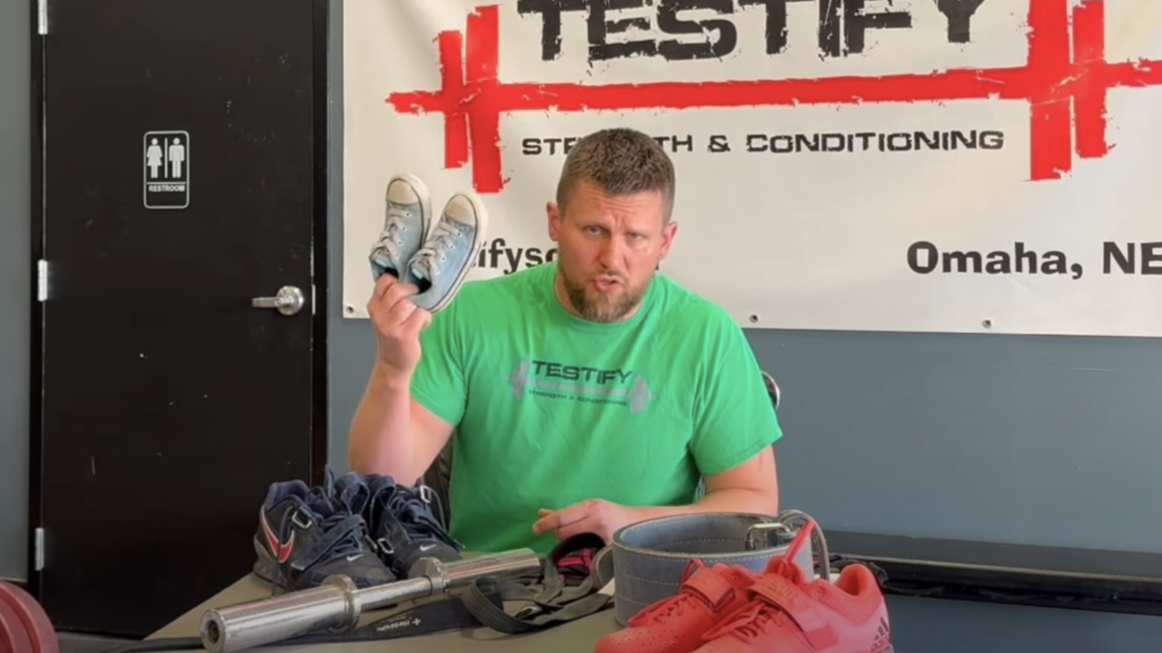
chucks are great for toddlers . . . not lifters.
Remember – Chucks are a lifestyle shoe, not a lifting shoe. They’re comfortable to walk around in, which tells you that the sole is far more compressible (i.e., squishy) than you want for lifting.
Instead, go out and get yourself an actual pair of lifting shoes. The non-compressible sole makes for a fantastically solid platform on which to lift. Other shoes feel like lifting on pillows by comparison.
Here are some solid choices to get you started on your shopping:
Nike Romaleos 4
Inov-8 Fastlift 360
VS Athletics Weightlifting Shoe
Adidas Adipower 3 (not the Powerlift)
Wrist Wraps
Don’t get 12 inch long wrist wraps. They don’t provide much in the way of support. Instead, get yourself a pair of 18 inch wraps or perhaps a pair of 24 inch wraps, but be warned that the 24 inch variety can be mildly cumbersome to put on.
Chalk
Specifically, we’re talking Spider Chalk versus everything else out there. Your basic magnesium carbonate chalk is a solid choice and will work fine.
However, the blocks from the folks at Spider Chalk are dense, solid, and tend not to break nearly as easily as regular chalk blocks.
It’s a bit silly to be a huge fan of a specific chalk company, but we are, and Spider Chalk is the only chalk we order.
Barbells
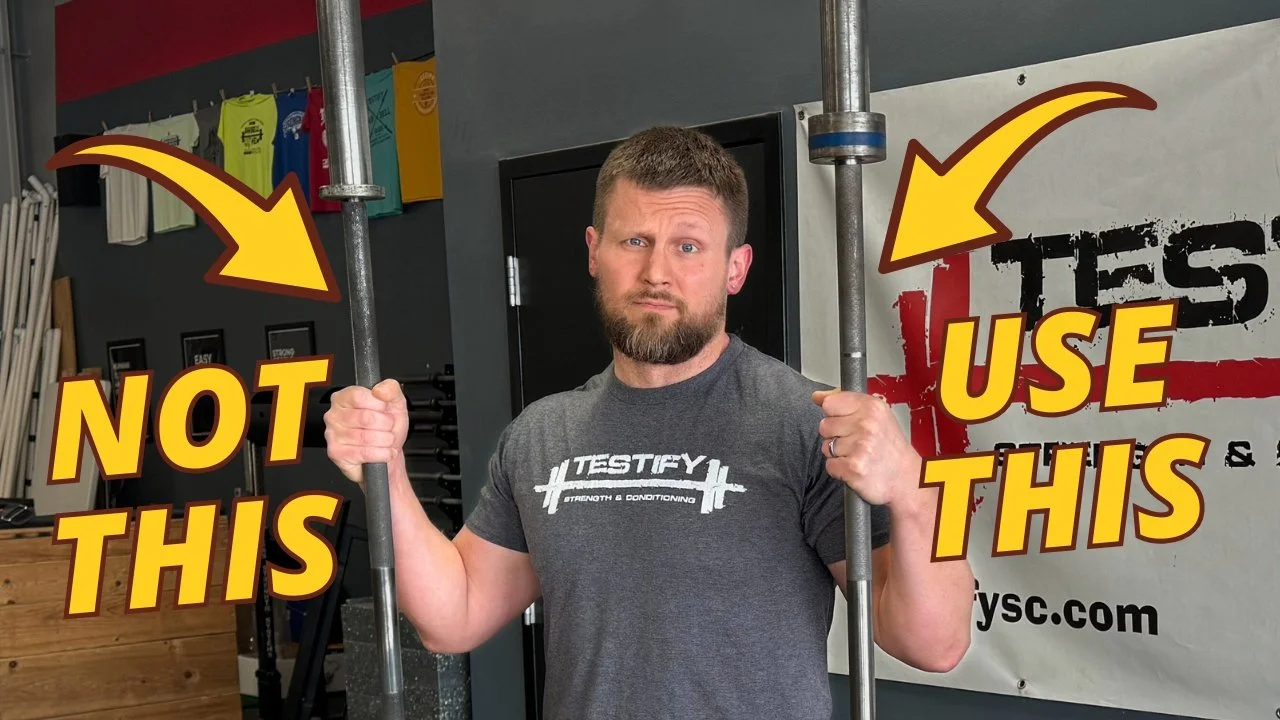
Don’t buy a 30 mm thick barbell. With a diameter of 30 mm or greater, you’re looking at a low quality barbell that had to be that thick since it was built from cheap steel.
Thick barbells make it very difficult to maintain a secure grip with heavy pulls, and this type of barbell also tends to rotate poorly (and loudly). Another sign of a low quality bar is a hex bolt in the place of an end cap. Avoid that bar like the plague.
Get a 28-29 mm diameter barbell and don’t skimp on quality. The barbell is the place to spend your money.
We are big fans of the Starting Strength Bar from Texas Power Bars, and I’ve also heard good things about the Powerlifting Bar 2.0 from Bells Steel. Finally, Grant Broggi of The Strength Co. makes the best lifting plates in the business, and I have no doubt that his barbells live up to that standard as well.
As always, we hope this helps you get stronger and live better. See you next week in Part 2!
-Phil
PS: Whenever you want even more Testify in your life, here are some free resources:
Book a free intro and strategy session with us HERE.
Pick up a free copy of Testify’s Squat Guide: 12 Tips to Improve Your Squat Now HERE.
Get our free weekly email - containing useful videos, articles, and training tips - HERE.
Follow Testify on Instagram HERE.
Subscribe to Testify’s YouTube channel HERE.
(Some links may be affiliate links. As an Amazon Associate, Testify earns from qualifying purchases.)