STOP Using Your Back Like This (How to Squat Correctly)
/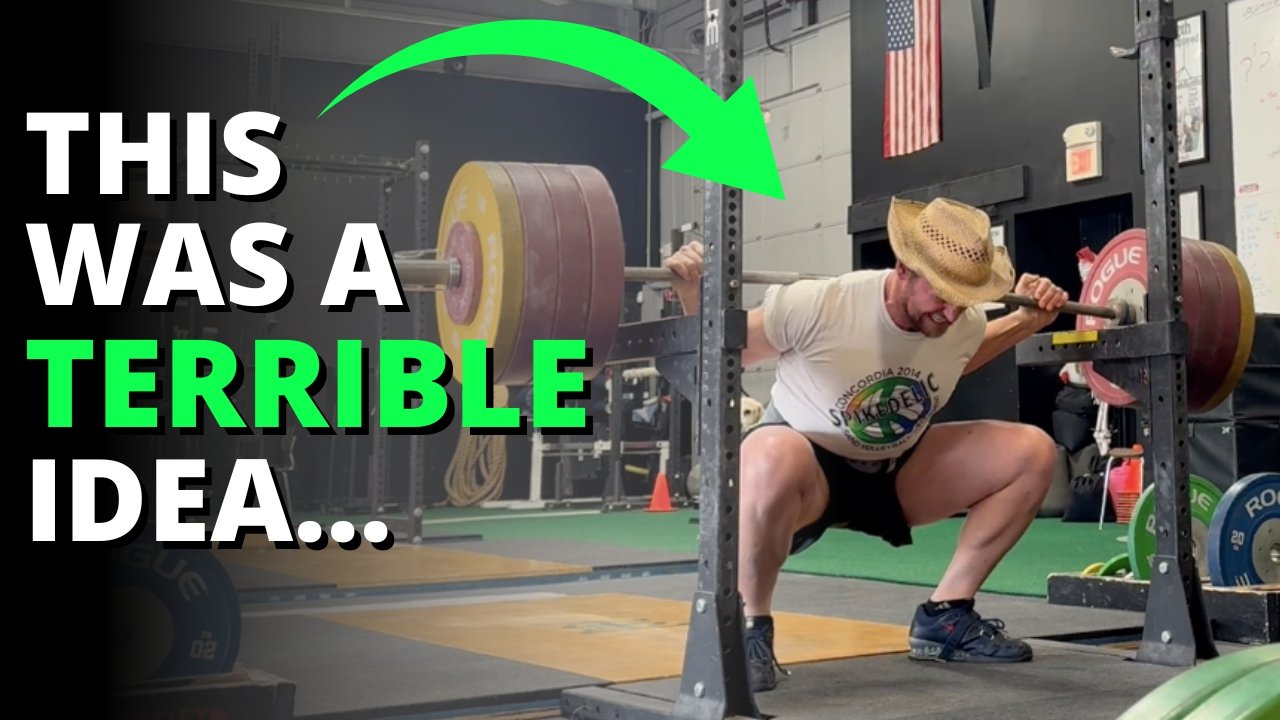
Are you using your back like a doofus when you squat? Let’s fix it.
We’re not talking about a conceptual misunderstanding of what to do with your back - if you’re reading this article or watching the accompanying video below, you’re probably aware of what you should be doing with your back as you squat. You’re trying to reach back with your hips and point your chest at the floor as you start your descent. You’re already aware that this relatively horizontal back angle in the squat makes for a stronger, more efficient back angle and is indeed how we train our backs to get stronger as well.
In this case, what could possibly go wrong?
We’re talking about the problem of overextension in the low back (i.e., arching the low back). Watch a video of yourself squatting, and as you start your descent, if you see more wrinkles develop in the back of your shirt - specifically, in the lower half of your back - then you are probably overextending your back.
In other words, if it looks like you’re twerking when you start to squat (Figure 1), you’ve got a problem.
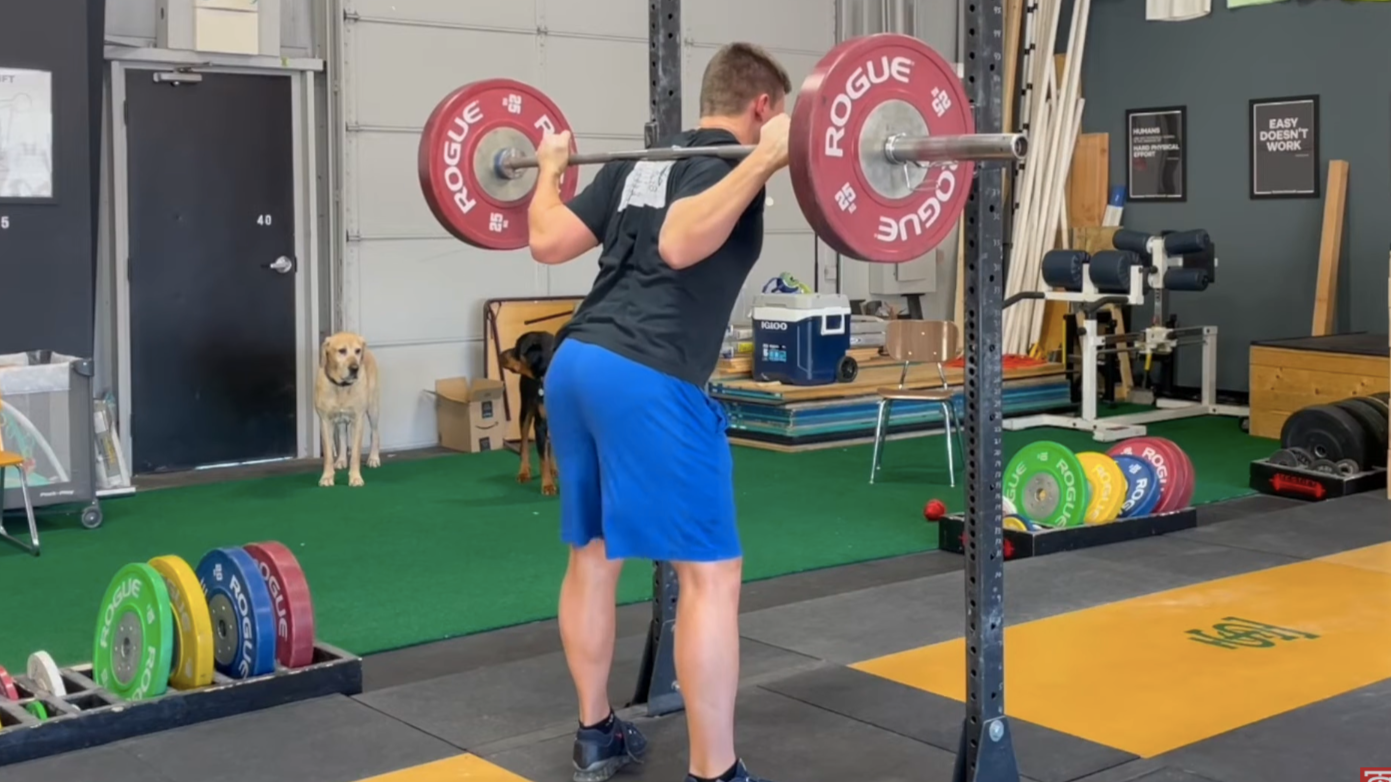
Figure 1: don’t squat like this fool.
This problem tends to show up more often with young kids and women, but the error can happen with anyone regardless of age or gender, and - on a rather important note - this problem tends to cause more back discomfort issues than a rounded (i.e., flexed) back.
Don’t get me wrong - we want a straight, rigid back when we squat, so we’re not looking for either an overextended (arched) back or a flexed (rounded) back, but of these two errors, the overextended back tends to cause more problems, and there are two situations which commonly cause this error to happen, so let’s take a look at them.
Cause #1: Bad Focal Point
A high focal point means lifters have to keep their eyes up, which usually causes them to keep their chest up (instead of pointing it at the floor), which - combined with reaching the hips backward - makes for an arched back.
This also means that if you squat in front of a mirror (and I’m terribly sorry if your gym is silly enough to put mirrors in front of the squat rack), you need to ignore that mirror. Looking at yourself while squatting means you’re keeping your gaze too high, which is no good. You don’t watch yourself while throwing a baseball or shooting a basketball, and you certainly don’t need to watch yourself while squatting either.
The solution is to choose a fixed point on the floor about four to six feet in front of you and stare at it the entire time you’re squatting. Stare at it before your first rep, during each rep, and between reps as well. Looking forward and down will help you reach your hips back and point your chest down as you start to descend, which allows you to achieve the correct back position.
Cause #2: Reaching Back Without Leaning Over
This version of the error shows up when a lifter knows he should reach back with his hips and lean over, but he accidentally only focuses on the “reaching back” part of the movement (Figure 2).
If you reach back with your hips and accidentally keep your chest up, you will be overextending your back, so the “reaching back” aspect of the movement must be accompanied by the “leaning over” or “pointing the chest down” aspect of the movement.
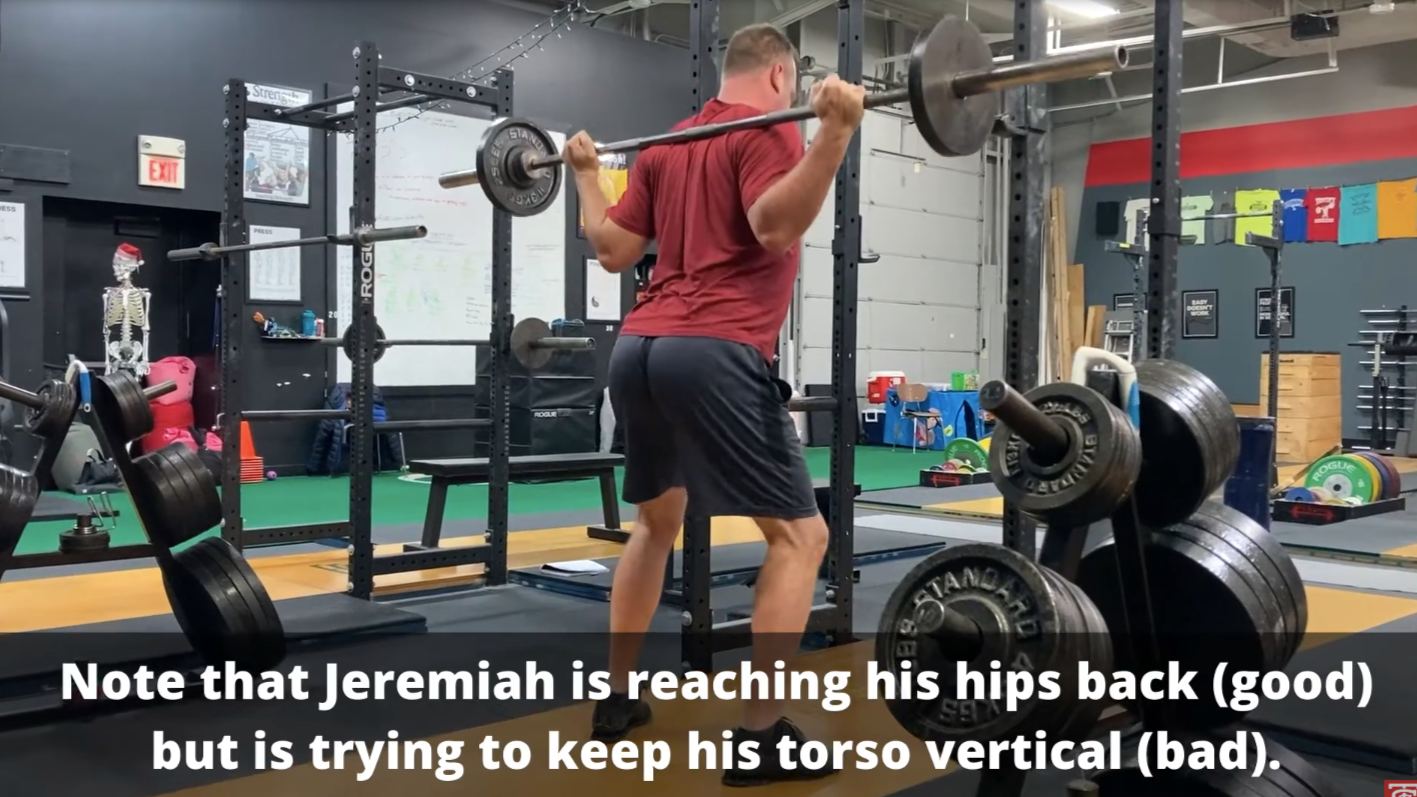
Figure 2: jeremiah was kind enough to purposely demonstrate the mistake of reaching back without leaning over. . . . don’t do this.
Reaching back and leaning over should go hand-in-hand, but if you can only focus on one part of that duo, I’d recommend focusing on the “lean over” cue. After all, you are probably quite adept at not falling over, so you’ll naturally reach back with your hips as you lean over to help with balance.
Bonus Cue
If you find that you still arch your back when you squat, then you can try out the overcue “round your back” or “flex your back” as you start to descend.
Remember - this is an overcue, i.e., an exaggeration of what you truly want to do. You don’t actually want a rounded or flexed back, but exaggerating the mental picture of what to do may help you achieve a straight back, which is what you want.
Find a good focal point, reach back with your hips, point your chest down, and as always, we hope this helps you get stronger and live better.
-Phil
PS: Whenever you want even more Testify in your life, here are some free resources:
Book a free intro and strategy session with us HERE.
Pick up a free copy of Testify’s Squat Guide: 12 Tips to Improve Your Squat Now HERE.
Get our free weekly email - containing useful videos, articles, and training tips - HERE.
Follow Testify on Instagram HERE.
Subscribe to Testify’s YouTube channel HERE.
(Some links may be affiliate links. As an Amazon Associate, Testify earns from qualifying purchases.)