What "Internet Fitness" and "Trainers" Get Wrong About Lifting Weights
/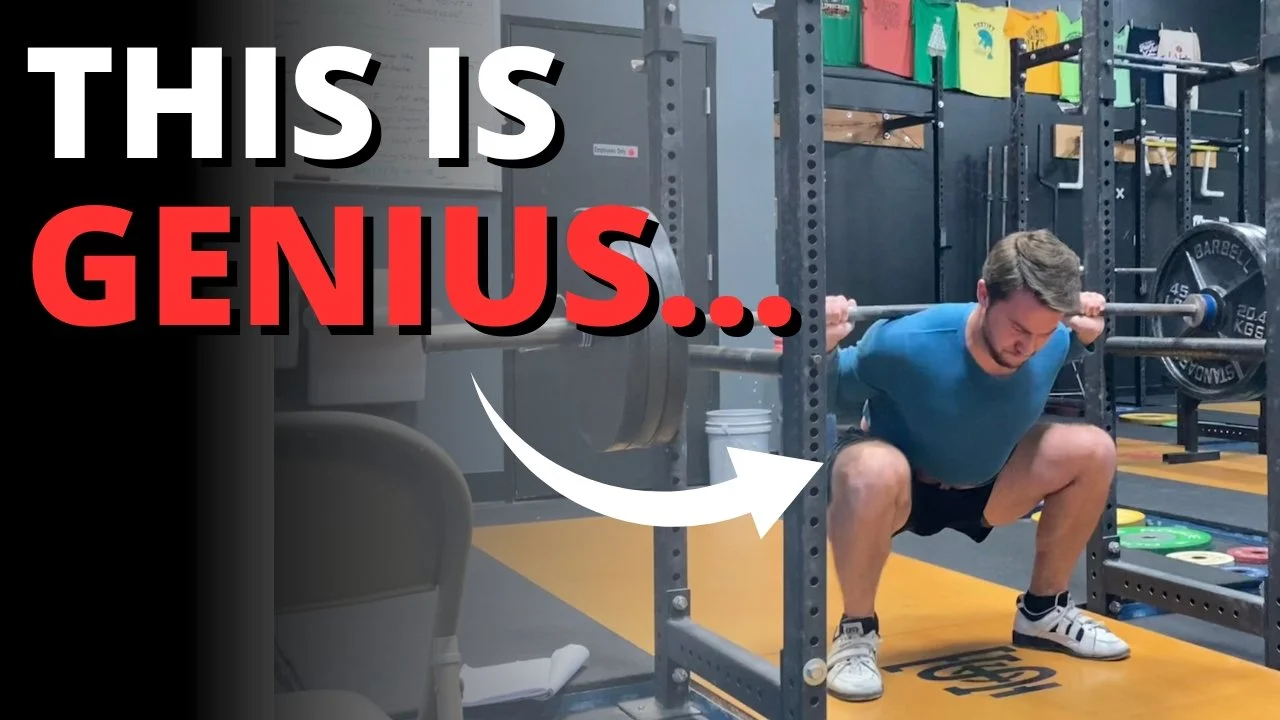
We get some good questions in the comment sections of our YouTube videos, and recently, one of them was (paraphrased), “In the squat, should I be using my quads on the way up? Should I be feeling my quads when I squat?”
This question boils down to an even more basic - and important - question that covers all of the barbell lifts, and that is, “Should I be cueing and/or thinking about my muscles when performing a lift?”
(If you’d rather watch a video on this topic, check out the short one below.)
Movements - Not Muscles
In short, no - you don’t think about your muscles when lifting weights. You think about movements - not muscles.
If you’re shooting a basketball, you don’t cue muscle groups since that would be ridiculous. You’re ready to shoot, you’re elevating, and your train of thought goes to “. . . glutes-hamstrings-quads-gastrocs-flexor-carpi-radialis-flexor-carpi-ulnaris-palmaris-longus!”
Again, ridiculous. There is simply too much going on and thinking about individual muscle groups will only slow things down and make the movement more difficult. Instead, you think about a specific movement, and the muscles “come along for the ride,” in a manner of speaking.
This is true in sports, in general movement, and it’s certainly true in lifting.
In the squat, you cue yourself to “drive your hips upward,” and as you drive your hips upward, your knees gradually straighten, which means your quads are doing their job (i.e., the job of knee extension).
In the deadlift, cue “push the floor away.”
In the press, cue “reach with the hips.”
In general, cue movements - not muscles, and you get the muscles automatically since they create the movement.
Any Exceptions?
To almost every rule, there is an exception, and we see that with the “cue-movements-not-muscles” guideline as well.
We generally cue movement, but when we are trying to prevent movement, cueing a muscle group can indeed be effective. For example, tell yourself to “flex your bicep,” and you’ll immediately lock your elbow into a frozen, flexed position, and thus, you are preventing movement. Here are some other examples:
In the press, you reach forward with your hips, but you don’t want your knees to bend (since we’re not performing a push press), so you might cue “tight quads” or “flex your quads.”
In the squat or deadlift, as you prepare to get tight and brace, you take a big breath, perform your Valsalva, and then cue “tight abs” to help transform your wiggly column of vertebrae into one long, rigid, steel beam.
In summary, if you’re specifically trying to prevent movement, you might find cueing a muscle group to be quite useful, but other than that, you want to cue movements rather than muscles.
As always, we hope this helps you get stronger and live better.
-Phil
PS: Whenever you want even more Testify in your life, here are some free resources:
Book a free intro and strategy session with us HERE.
Pick up a free copy of Testify’s Squat Guide: 12 Tips to Improve Your Squat Now HERE.
Get our free weekly email - containing useful videos, articles, and training tips - HERE.
Follow Testify on Instagram HERE.
Subscribe to Testify’s YouTube channel HERE.
(Some links may be affiliate links. As an Amazon Associate, Testify earns from qualifying purchases.)